


オルクログ BLOG
2026.02.12
Comparing FX2 and FX3 shots taken with AF!
Hello everyone! This is Iwamoto from olq!
Today, I’d like to talk about the differences in the autofocus (AF) system I experienced while shooting using the " FX2 [ILME-FX2B] " and the " FX3(ILME-FX3) " respectively!
“Compared to the FX3 / FX30, eye detection accuracy for people has improved by approximately 30%.”
☝️This statement comes from Sony’s official website and highlights one of the key features of the AF system in the FX2, the latest model in the Sony Cinema Line series, released in August 2025.☝️
Furthermore, note that the “approximately 30%” statement is based on measurements conducted internally by Sony. Since no detailed information has been disclosed regarding the testing conditions or methodology, let’s skip this specific number for now, shall we?
For this comparison, we matched the AF settings for the FX2 and FX3 cameras, and filmed videos in conditions as similar as possible. The objective: to prove whether this “approximately 30%” improvement could be felt in real-world shooting by hands-on-use.
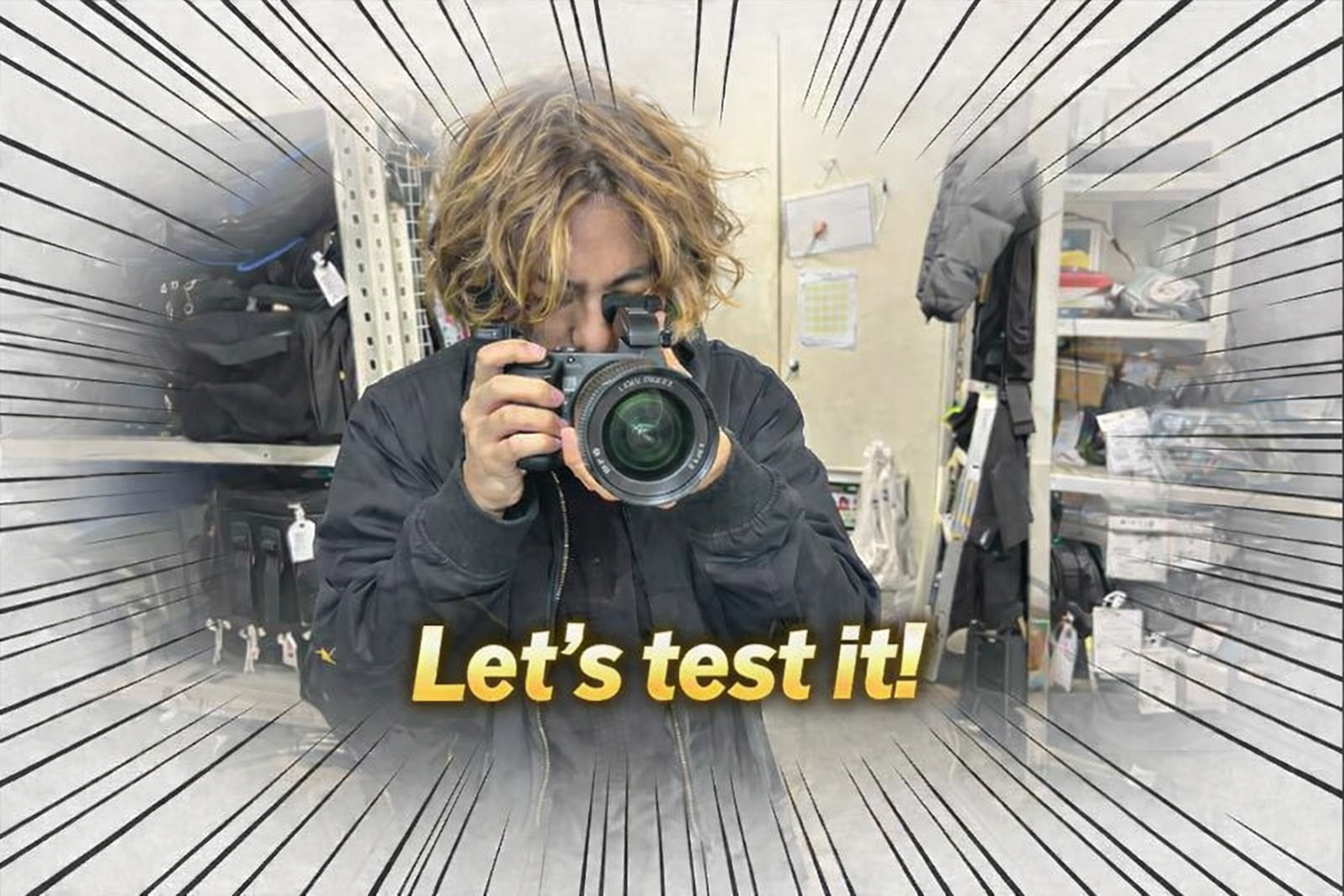
Katsuo kindly assisted today as the subject for the photo shoot and handled the FX2 for the test.
He is looking through the tilt-type EVF (electronic viewfinder), which is the first viewfinder ever introduced in Sony’s Cinema Line series.
Background of AF Performance Improvement
What lies behind the improved AF performance of the FX2 camera is:
The integration of an AI Processing Unit.
Subjects recognized by AI show stable and reliable focus tracking; therefore, many users have given this feature high praise 👍
In the AF “Subject Recognition” settings, you can also see that the FX2 offers a wider range of selectable options compared to the FX3.
(FX3 Subject Recognition settings screen)
Within the “Face/Eye Detection Target” menu, it is possible to select humans and animals as focus subjects.
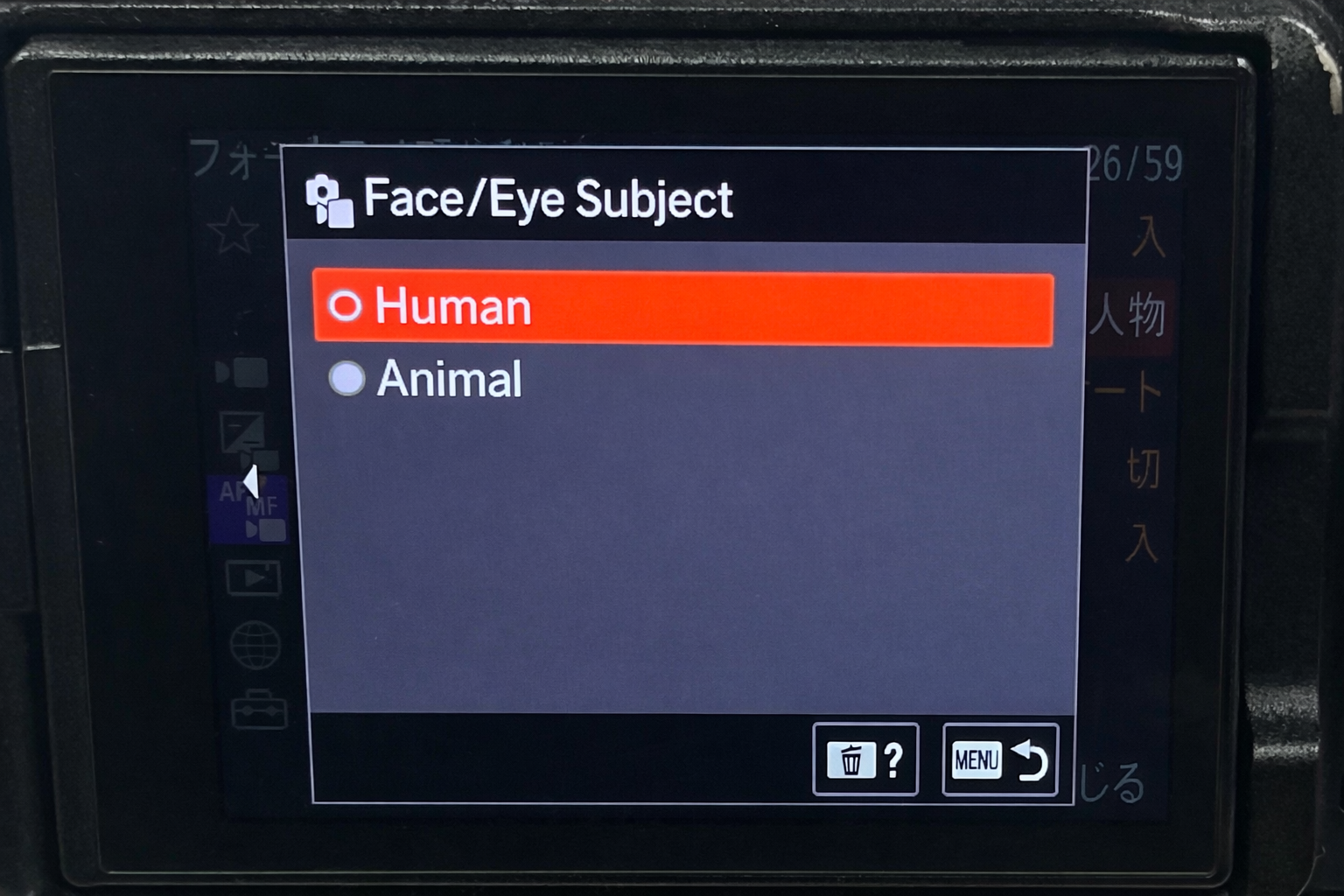
(FX2 Subject Recognition settings screen)
You can choose between: Auto / Human / Animal & Bird / Insect / Car & Train / Airplane
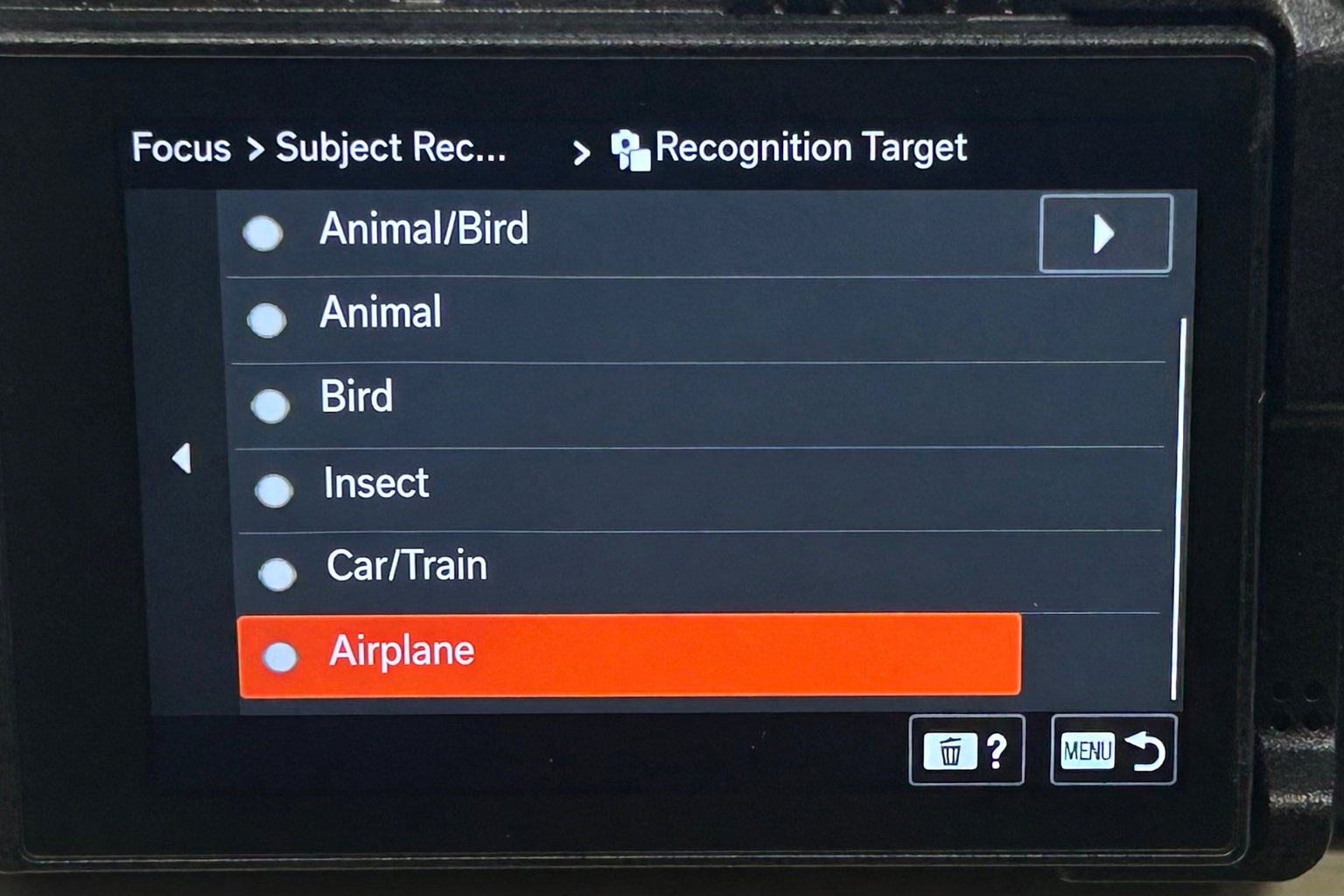
However, users may have differing opinions on this increase in options.
Personally, I felt that, depending on the shooting conditions and the operator’s skill, this feature is not something to rely on.
Camera Settings
For this shoot, both the FX2 and the FX3 were tested using the same lens and identical AF settings.
The subject recognition target was limited to “Human” which is a setting common to both the FX2 and FX3.
※The on-screen display shown here is from the FX3
| Lens | FE70-200mm F2.8 GM OSS Ⅱ [SEL70200GM2] |
|---|---|
| Focal Length | 200mm |
| Aperture | 3.2 |
| Subject Recognition (Face/Eye) | Human |
| Face/Eye Priority in AF | On |
| Registered Face Priority in AF | Off |
| Focus Area | Wide |
| AF Transition Speed | 4(Standard) |
| AF Subject Shift Sensitivity | 3(Standard) |
| AF Assist | Off |
| Left/Right Eye Selection | Auto |
| Subject Recognition Frame Display | On |
| Touch Operation During Recording | Touch Tracking |
Shooting Scenarios & Camera Placement
Shooting Scenario
To compare eye-detection accuracy and subject tracking performance, we asked our subject (Katsuo) to follow the scenario below:
"Ride a bicycle as if heading out for lunch break.
After riding for a short distance, realize you forgot your wallet, then turn around and return along the same route"
Since this was only a simulated setup, focusing purely on the subject’s movement, the sequence can be summarized as follows:
①The subject rides a bicycle from Point A to Point B。
②The subject then turns around and rides back from Point B to Point A。
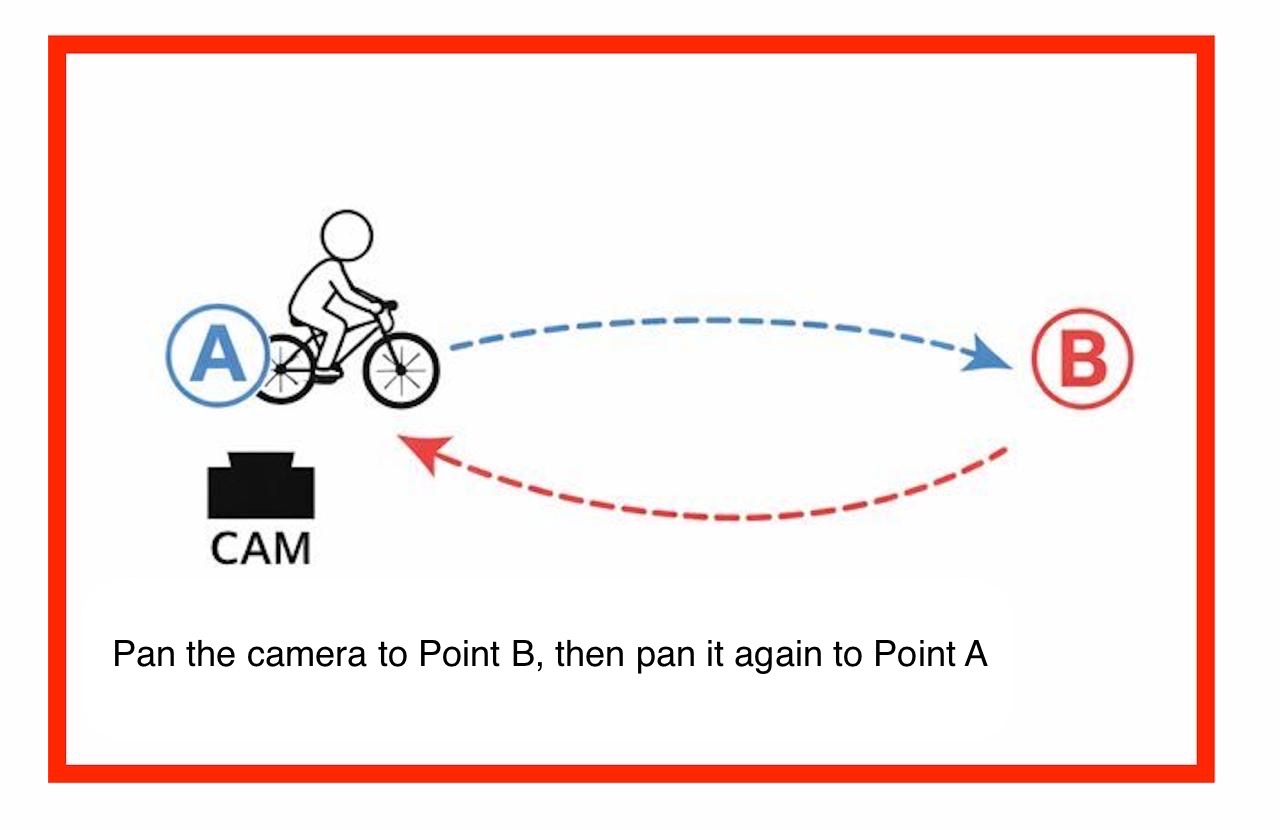
Camera Placement
The camera was fixed to Point A on a tripod, and the scene was recorded in a single continuous shot.
As soon as the subject began riding the bicycle, Touch Tracking was used to select the subject’s face by tapping it on the monitor.
Once recognized as a human subject, autofocus tracking was activated.
While the subject moved toward Point B the camera remained fixed on the tripod at Point A, tracking the subject as they moved away from the camera.
During this movement, the subject naturally turns their back to the camera.
Since one of our key interests was whether the camera could continue to recognize and track the subject as a person even when only their back was visible, we intentionally chose this shooting method.
After reaching Point B, the subject then turned around and rode back toward the camera along the same route.
Beginning filming
Starting from Point A
From each point in the sequence, we will alternately show the monitor screen and the shooting results of the FX2 and FX3.
First, let’s look at the start position at Point A
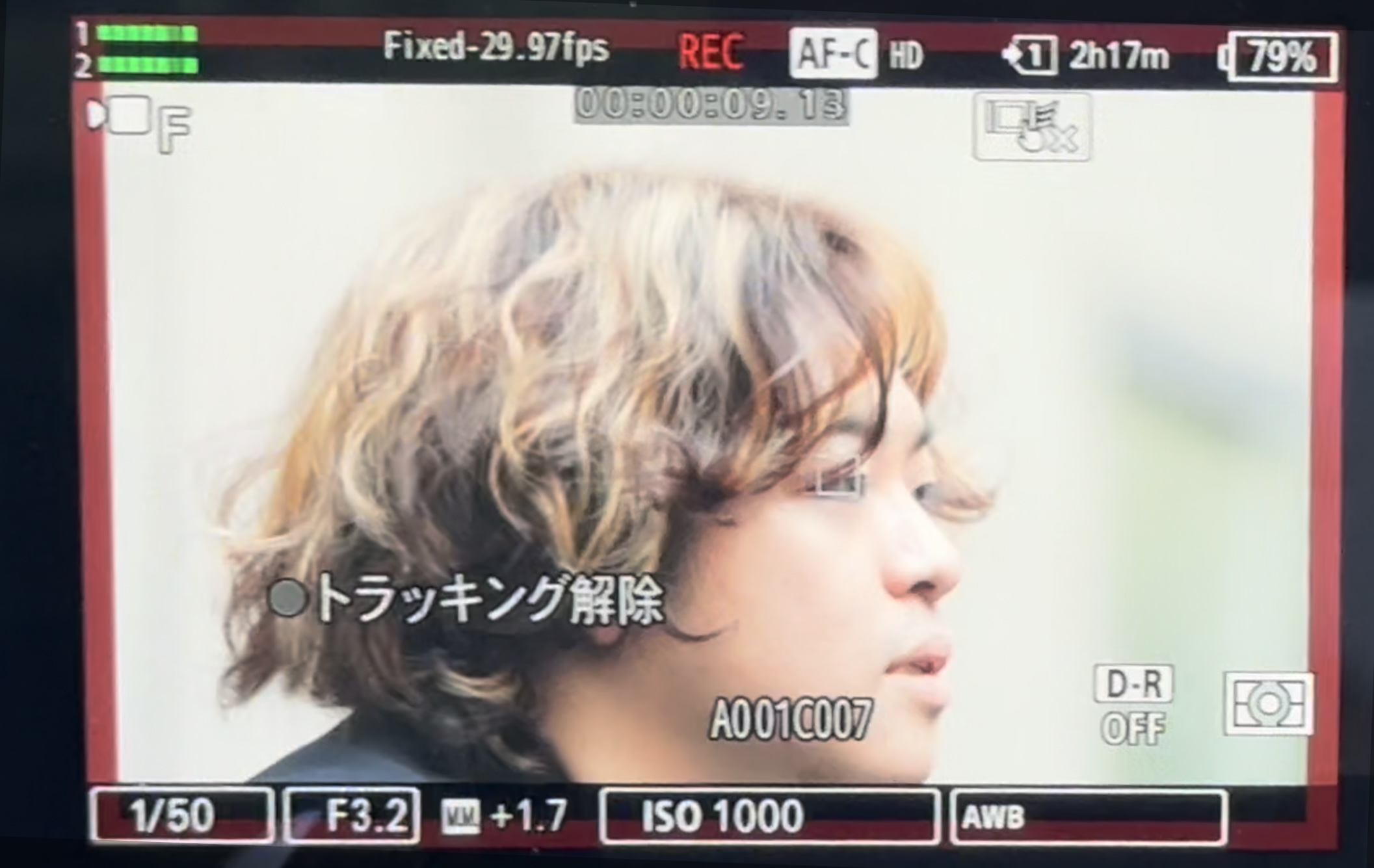
FX2
Left image: "FX2 Monitor Screen"
By touching the subject on the screen with a finger, tracking is activated.
Once the camera recognizes the subject’s eye, a subject recognition frame (white box) appears over the eye.
Right image: "FX2 Shooting Result"
Focus is accurately locked on the subject. The focus is sharp and stable.

FX3
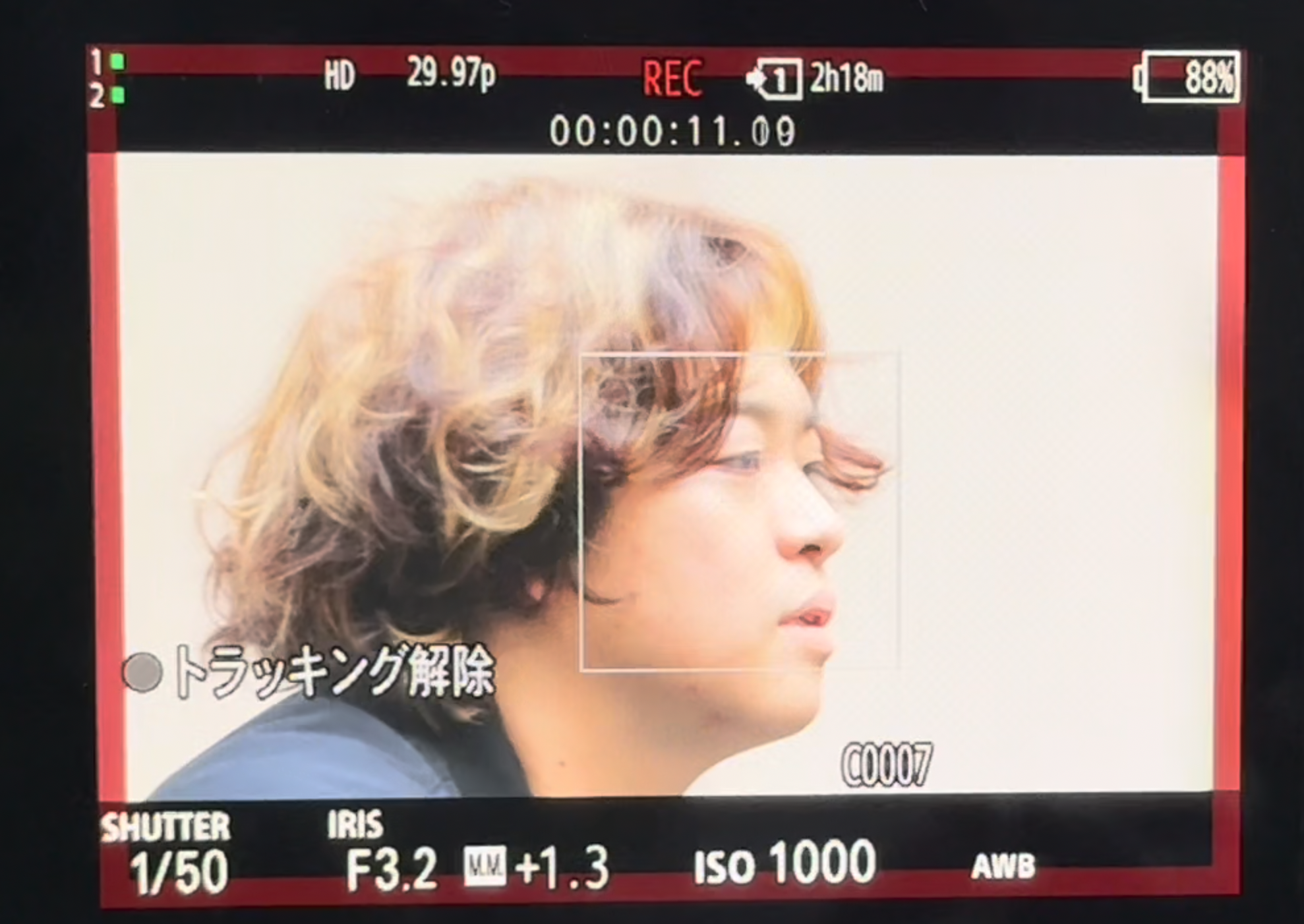
Next, let's take a look at the "FX3 Monitor Screen" image on the left.
By touching the subject on the screen, tracking is activated.
However, the subject recognition frame was not stable.
It repeatedly switched between displaying on the eye and on the entire face, making the tracking less consistent.
In terms of eye detection accuracy, the FX2 clearly demonstrated greater stability.
That said, focus tracking on the subject as a “person” was stable on both cameras.
Right image: "FX3 Shooting Result"
There were no issues with focus accuracy in the recorded footage.

Movement Toward Point B(Subject Facing Away from the Camera)
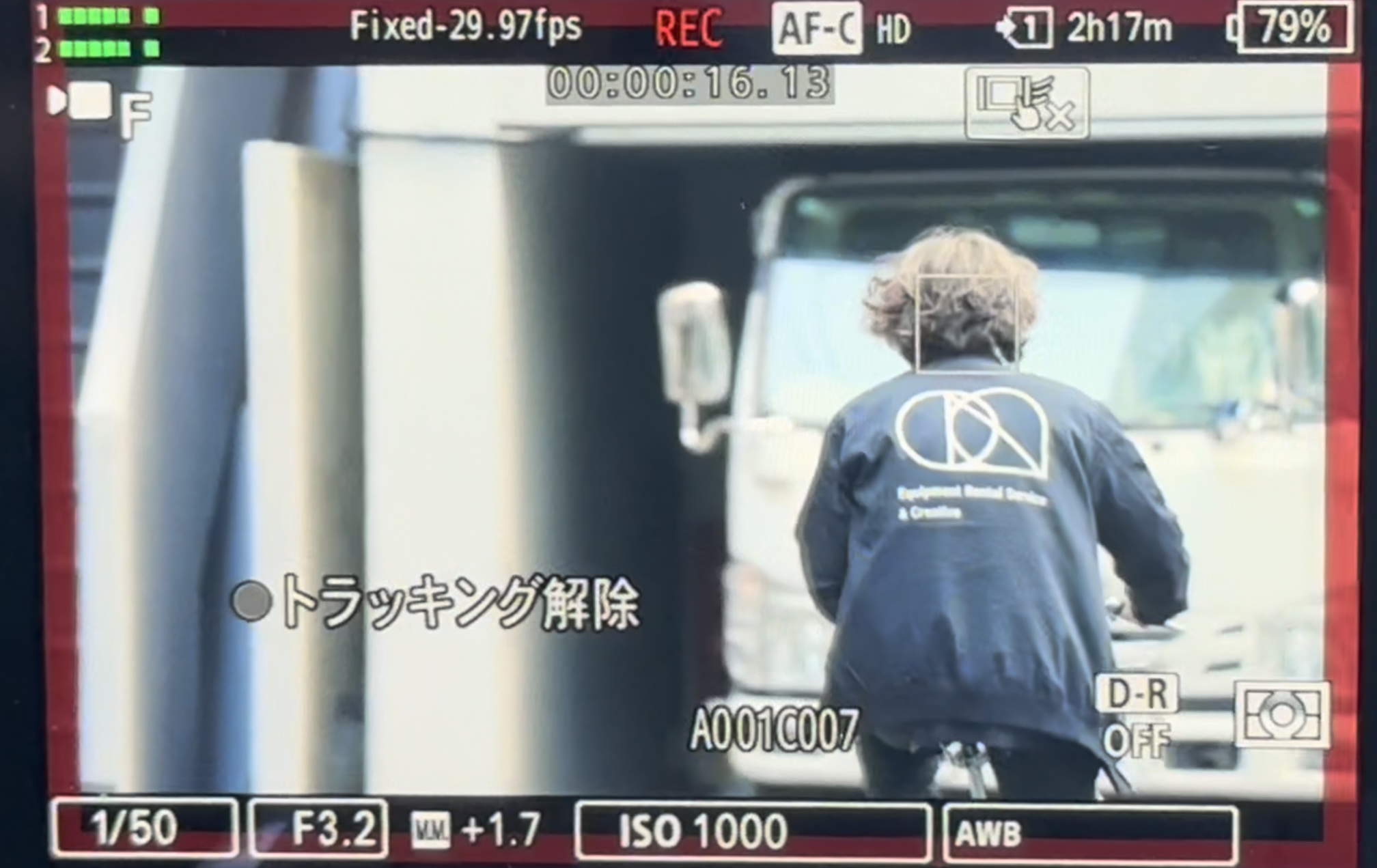
FX2
Left image: "FX2 Monitor Screen"
Even with the subject facing away from the camera, the system continued to recognize the subject as a person, and the recognition frame remained positioned around the head area.
Tracking performance remained stable and reliable.
Although tracking a subject riding a bicycle could have been a potential concern, the FX2 was able to maintain subject recognition even from the back.

FX3
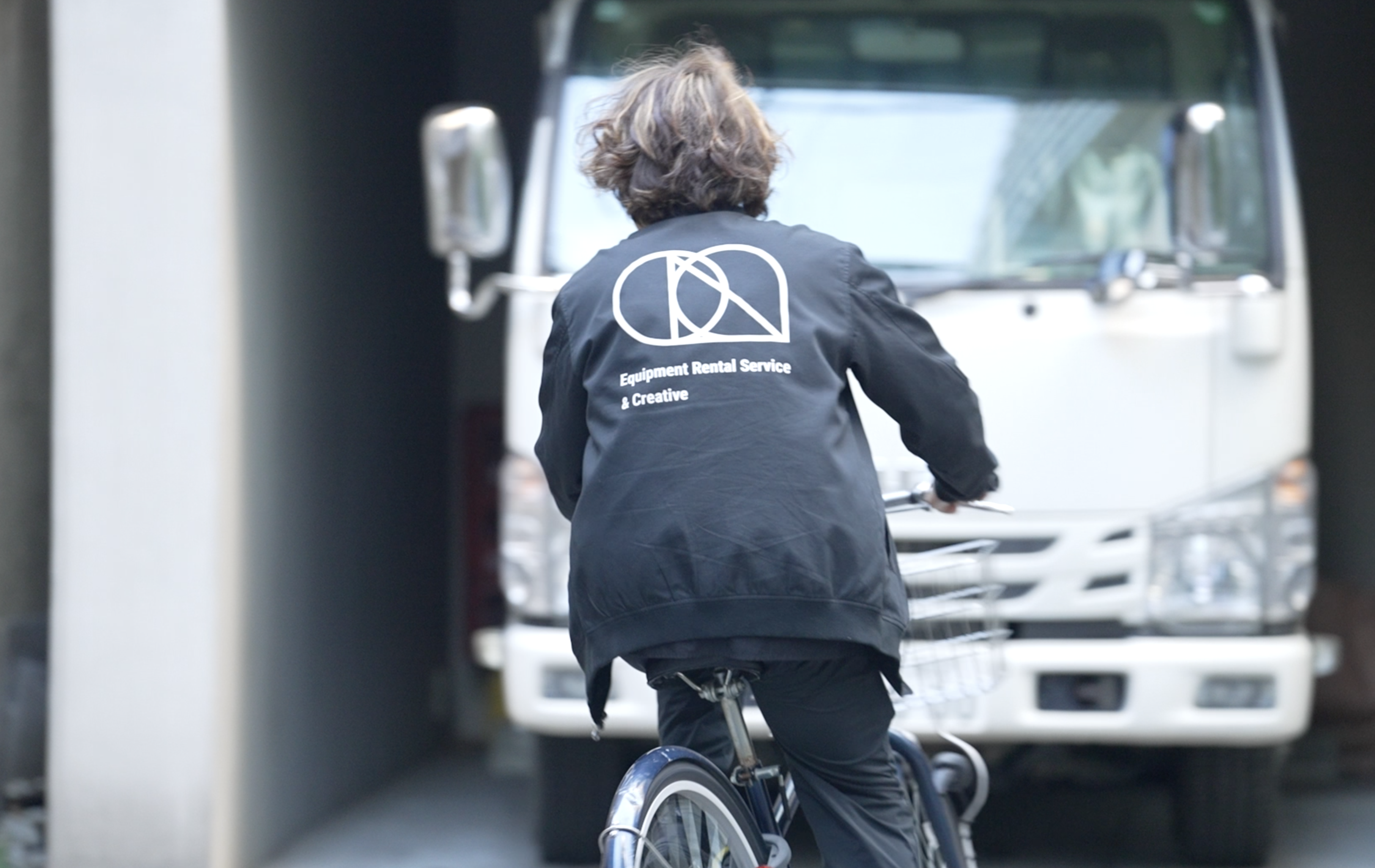
Left image: "FX3 Monitor Screen"
At the moment the camera panned, the system was unable to properly respond to the subject’s profile, causing tracking to disengage.
However, since the recognition target was still set to “Human”, focus remained stable even with the subject facing away from the camera.

Returning from Point B to Point A
In the film industry, there is a term called “shutter”.
This refers to a situation where the subject is momentarily blocked by an external object.
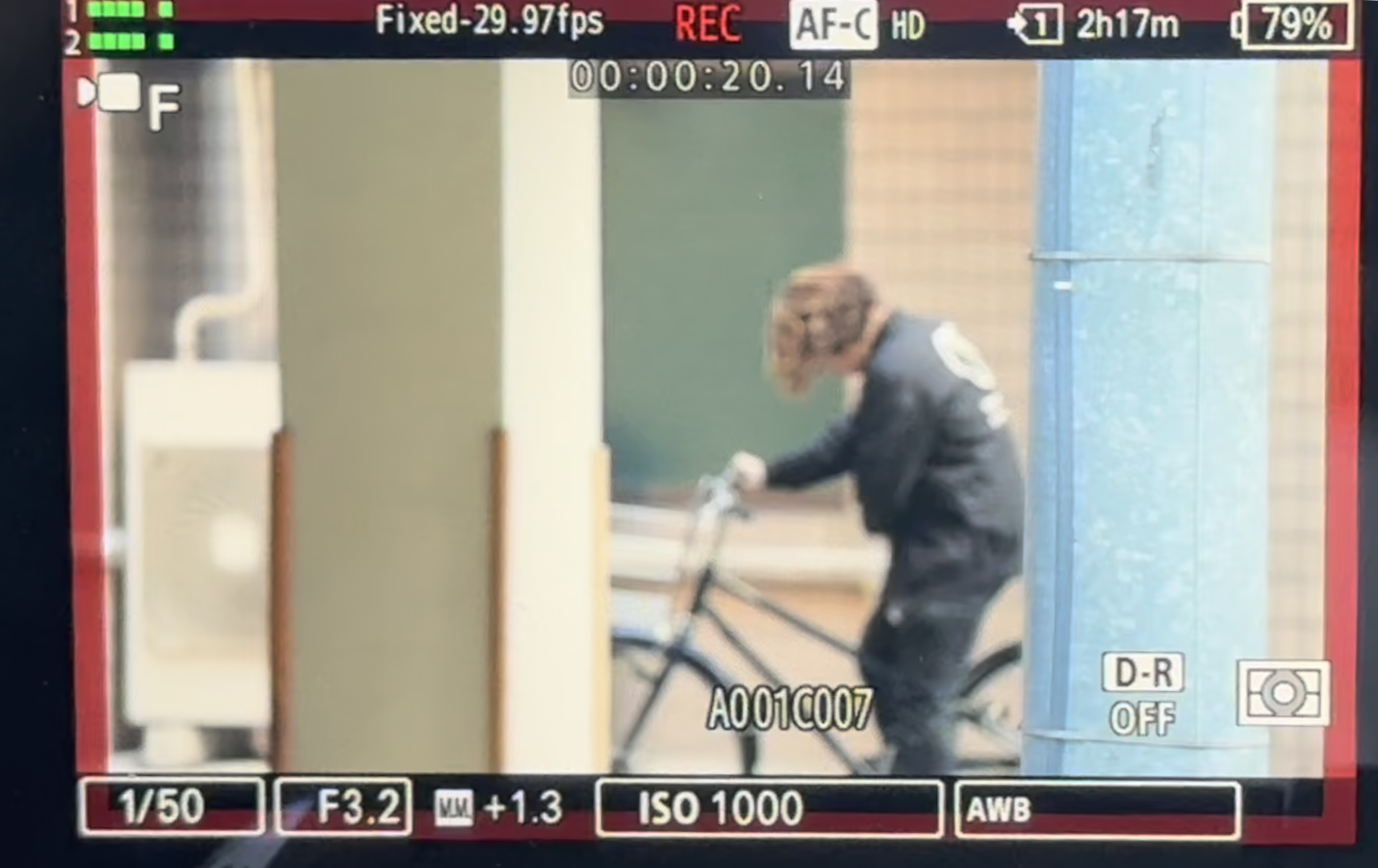
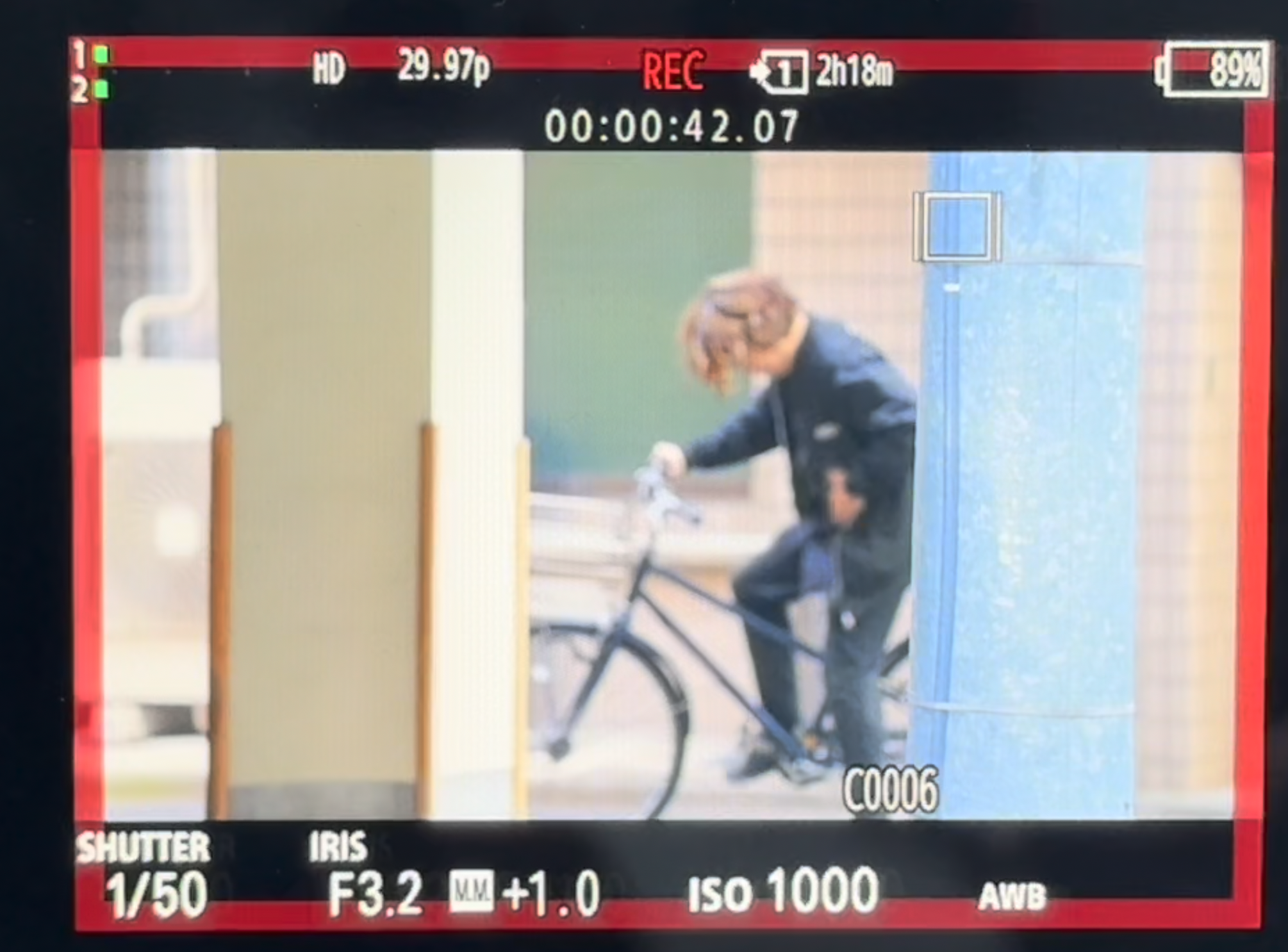
In this case, there was a utility pole positioned between Point B and the camera, briefly obstructing the subject from view.
FX2
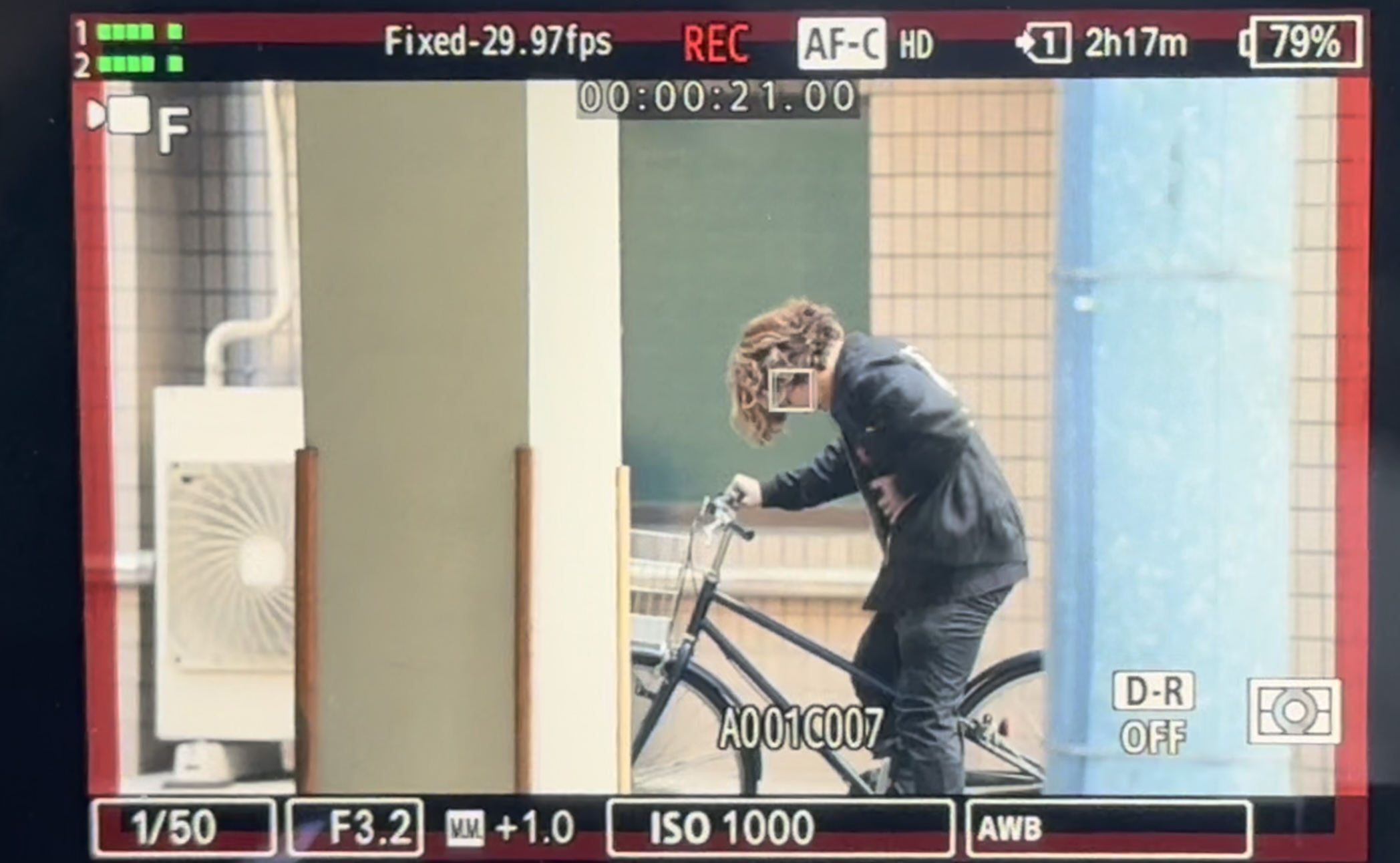
"FX2 Monitor Screen"
When the subject was briefly blocked, tracking was disengaged and focus momentarily shifted to the utility pole.
However, because the recognition target was set to “Human” and the subject remained within the frame, focus returned to the subject in approximately one second.
Once focus was restored, the eye-detection recognition frame reappeared over the subject’s eye.
"FX2 Shooting Result"
A short-acting moment takes place: “I forgot my wallet…I’d better go back.”


FX3
Left image: "FX3 Monitor Screen"
This is where a clear difference became apparent.
At Point B, focus remained locked on the utility pole, even after the subject re-entered the frame.
Right image: "FX3 Shooting Result"
We repeated the take several times, and each time the utility pole acted as a “shutter”, the camera was unable to re-recognize the subject as a person.
As a result, focus shifted to the utility pole with a high frequency, and the recognition frame also moved onto the pole.

Back at Point A
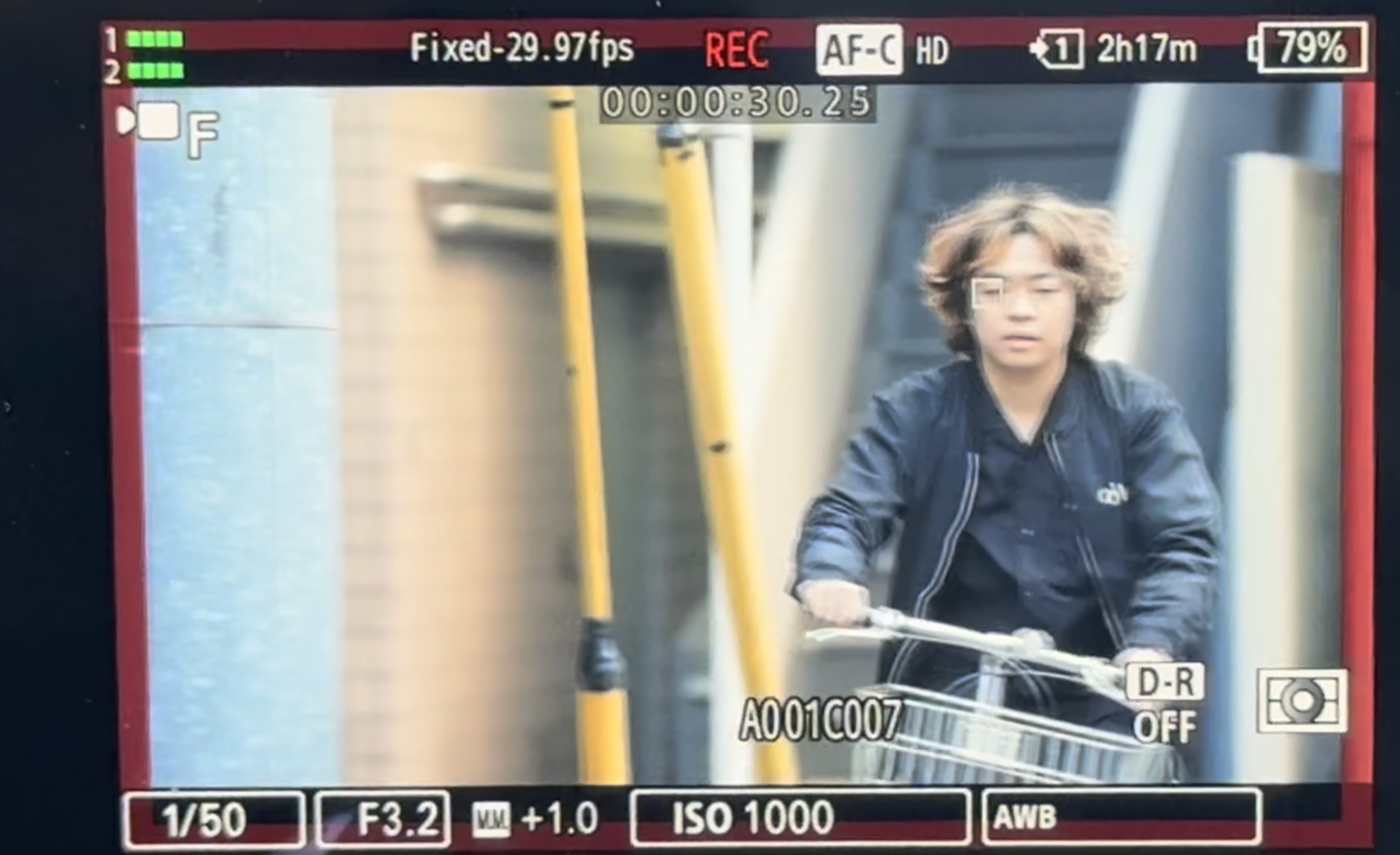
FX2
"FX2 Monitor Screen"
Katsuo has returned!
Once again, the FX2 demonstrated persistent and reliable eye detection, with the recognition frame firmly locked onto the eye.
The improvement in the AF system was clearly evident.

FX3
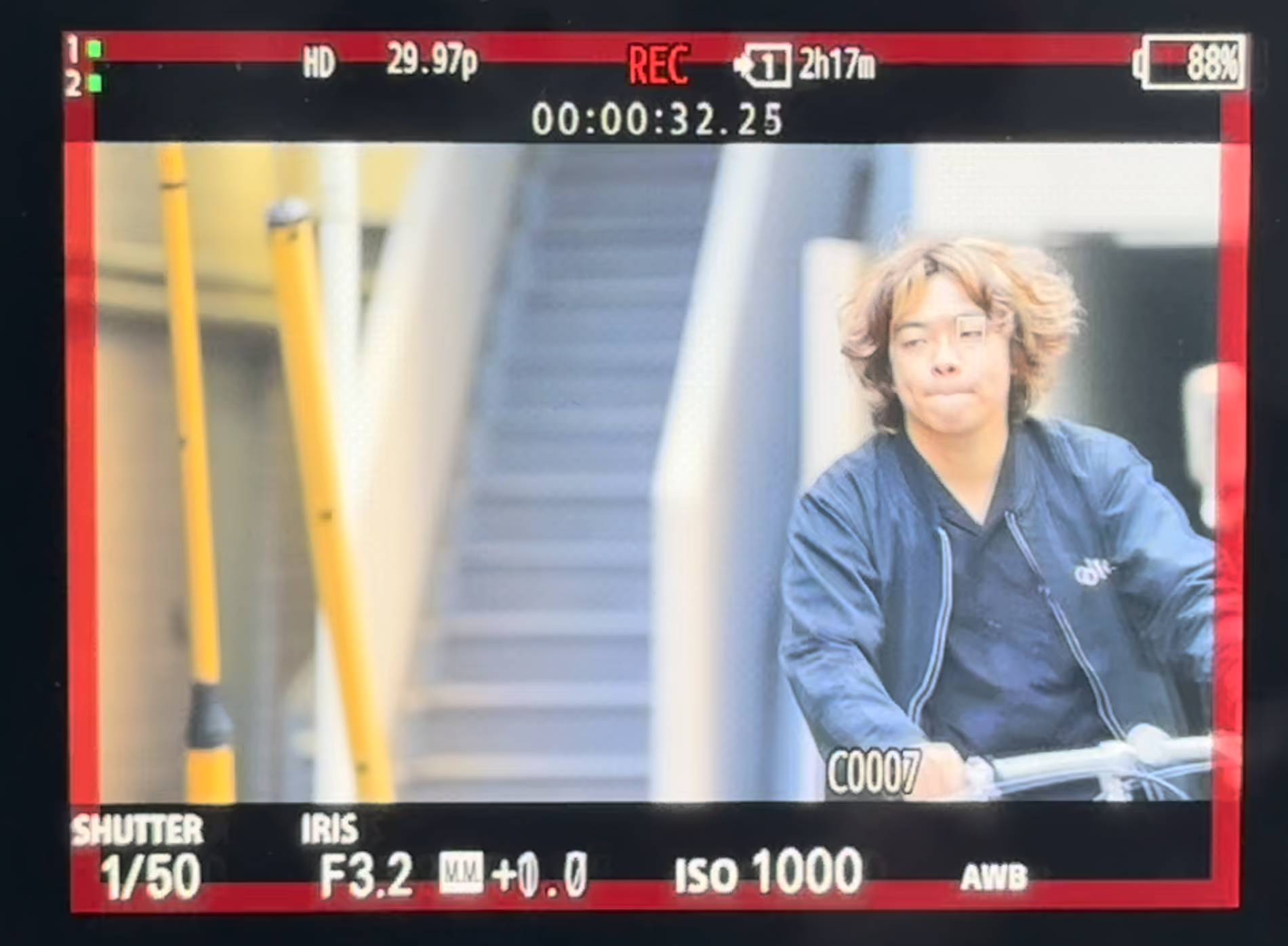
Left image: "FX3 Monitor Screen"
After departing from Point B, the camera was able to re-identify the subject, successfully regaining eye detection and focus.
Right image: "FX3 Shooting Result"
The subject was correctly re-acquired and captured as a human subject without issue.

We plan to upload the footage from this shoot at a later date!
Test Results
Seeing a clear difference between the two cameras was honestly a relief for me.
That’s because I was able to personally confirm that the FX2 is equipped with strengths that are on par, if not superior, to the FX3 in certain areas.
When it comes to AF performance during real-world shooting, the FX2 demonstrated a noticeably higher level of performance compared to the FX3.
That said, one of the FX2’s new features, the tilt-type EVF (Electronic Viewfinder), was not used during this shoot. While I was personally interested in trying it, I didn’t feel it was necessary based on the shooting style and camera movement used this time. Still, having the option available is certainly a positive point.
That concludes our AF system comparison between the FX2 and FX3.
Thank you very much for reading this blog to the end!
We've uploaded verification videos on YouTube!
Please take a look!
See you next time 👋
Olq inc. specializes in renting video, audio, and related production equipment!
If you're considering using our services for the first time, please register as a member in our e-commerce site and fill out the required fields.
Feel free to contact us anytime, even just for equipment rental inquiries!