


オルクログ BLOG
2026.03.23
Get to know the DR-10C!
We want you to get to know the DR-10C!
Hi, there! My name is Katsuo from OLQ Inc.
In this blog post, I’d like to introduce a piece of equipment called the "DR-10C[RAMSA Version]"
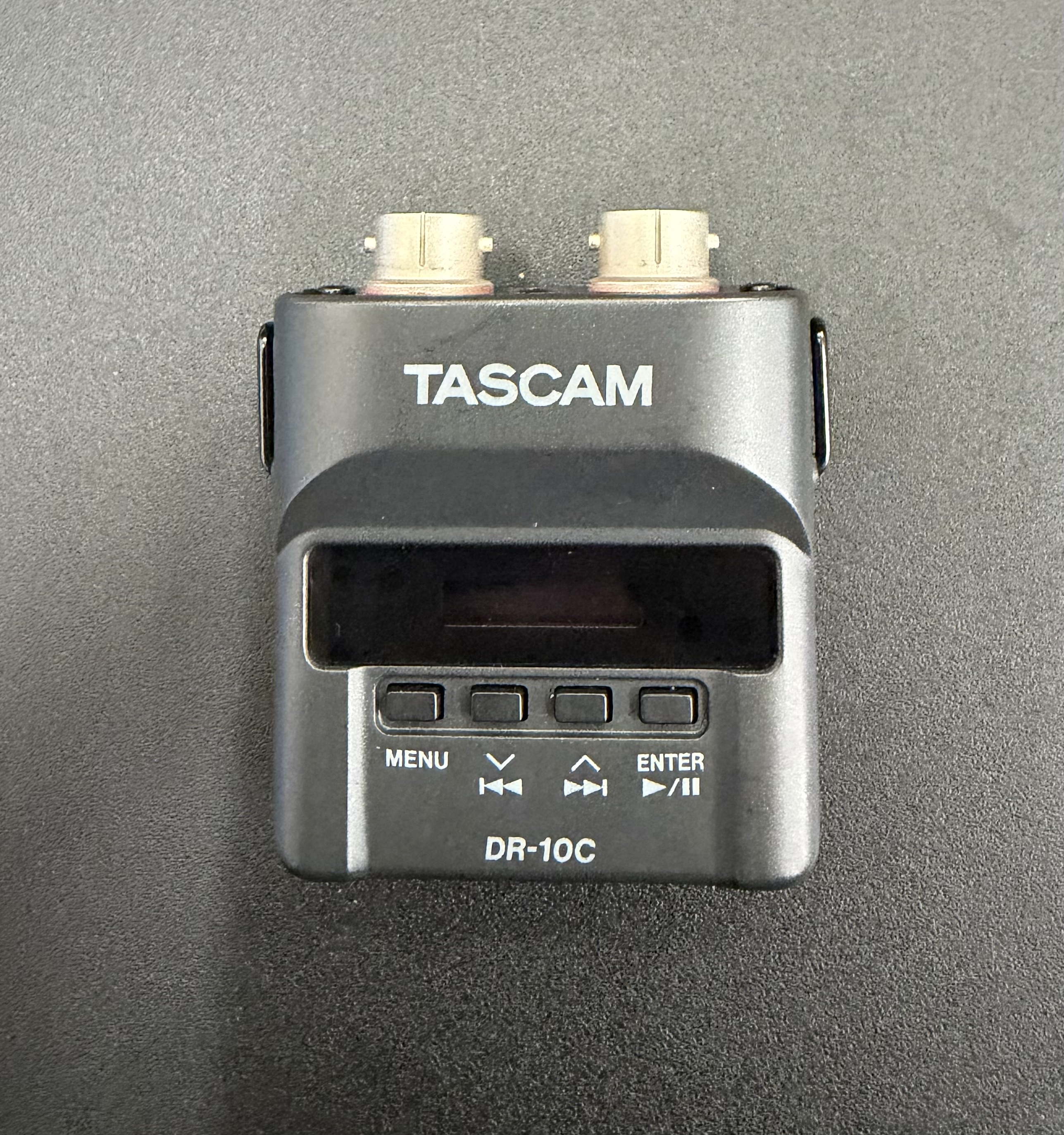
At OLQ Inc., we offer a wide variety of equipment, but the main reason we are featuring the DR-10C this time is simple:
It is our exclusive product!
Since this is equipment exclusive to OLQ Inc., I certainly can’t pass up the chance to introduce it to all our readers.
So, let’s dive right in and explain exactly what the DR-10C is.
What exactly is the DR-10C?
The DR-10C is a micro PCM recorder for wireless microphones, developed by TASCAM (TIATECH Corporation) in December 2014.
…That sounds a bit complicated, right? Let’s break it down.
First, a wireless microphone is a device that transmits audio from a transmitter to a receiver via radio signals, thereby enabling wireless audio transmission.
They are frequently used because of their convenience (being cable-free) and their sleek appearance.
On the other hand, because it relies on radio signals, a drawback is that it can become unstable due to signal conditions or distance.
During recording sessions, we use wireless microphones to capture audio. If the connection becomes unstable, the signal received by the receiver becomes unstable as well, making it impossible to record sound.
As long as we rely on radio waves, the risk of the connection dropping out will always remain.
And that’s exactly what the DR-10C was designed to solve!
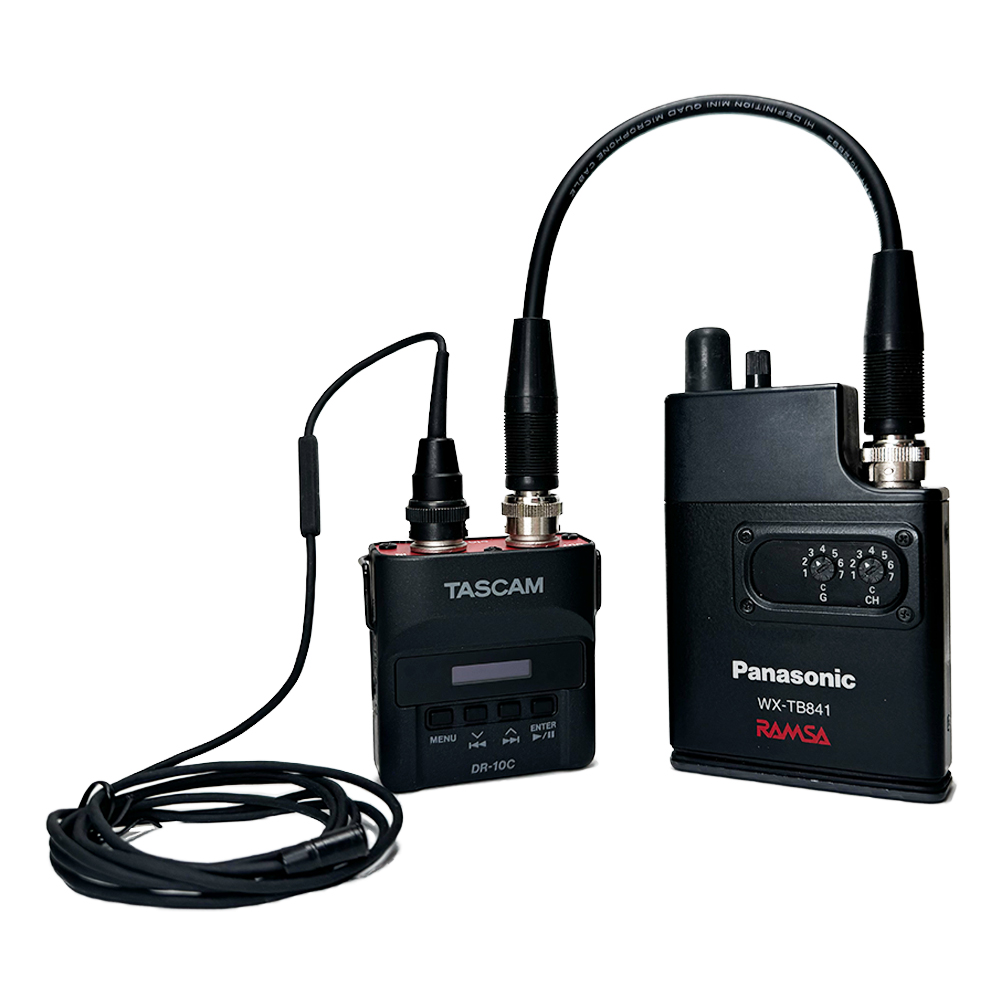
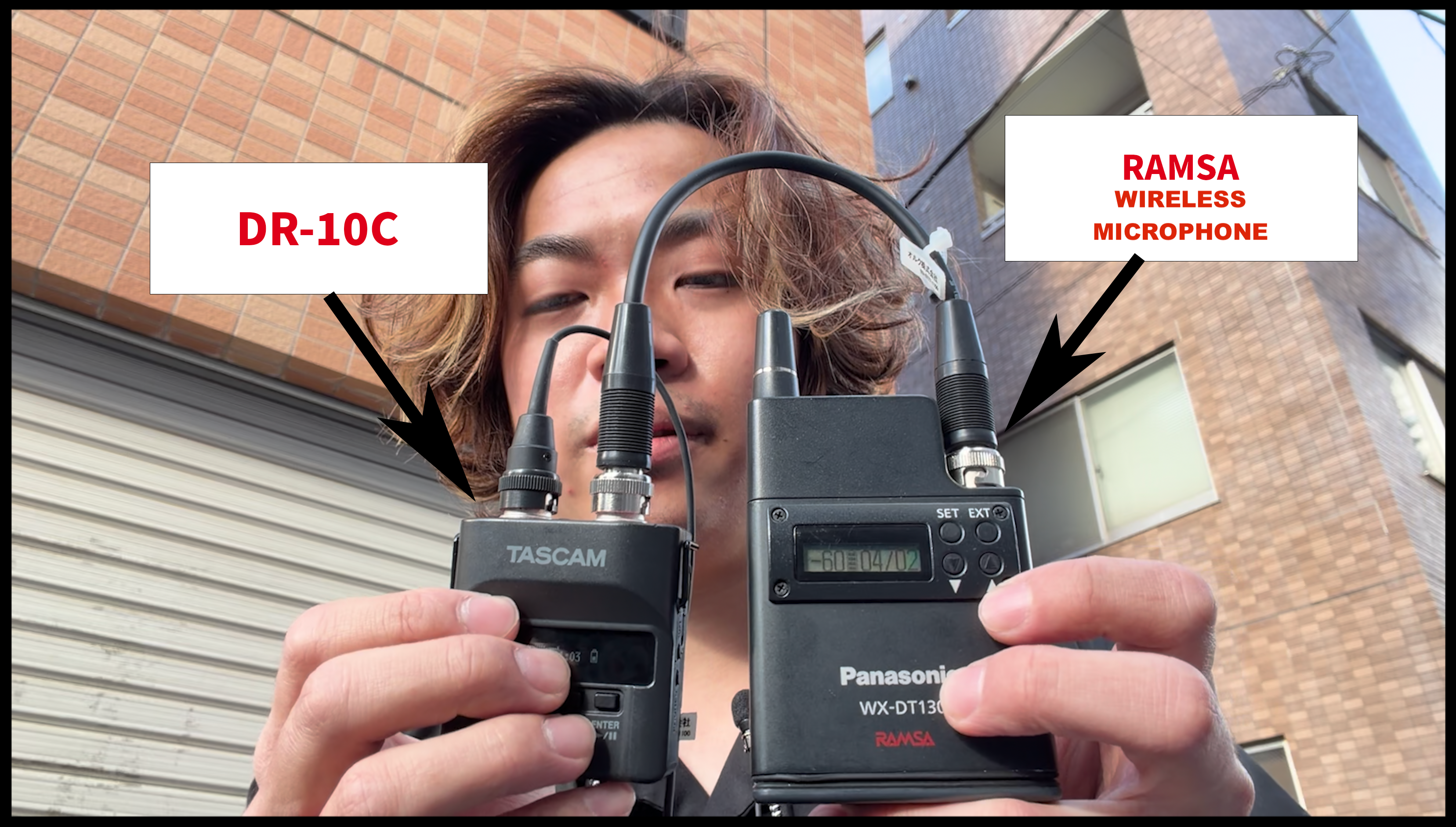
By connecting the DR-10C between the lavalier microphone and the transmitter, you can maintain a wireless backup even if audio quality is compromised due to poor signal reception or other issues with the transmitter.
The connection issues were solved based on the idea that, no matter what happens with the signal, you’ll be fine as long as you record it separately!
〜〜〜〜〜〜〜〜〜〜〜〜〜〜〜〜〜〜〜〜〜〜〜〜〜〜〜〜〜〜〜〜〜〜〜〜〜〜〜〜〜〜〜〜
The original DR-10C, manufactured by TASCAM, has already been discontinued and is no longer available on the market. However, OLQ Inc. has modified and recreated this product as a semi-original version available for rent!
So why did we decide to make it in the OLQ Inc. specification? Well, our CEO, Mr. Inoue, recognized the potential of this niche product, which was ahead of its time, and seeing that it had already been discontinued, he took on the project with the mindset of, “If it doesn’t exist, let’s just make it!”.
That takes some real guts.
If you’d like to know exactly what improvements OLQ Inc. has made to the DR-10C, you can find out by visiting our e-commerce site.
To summarize, we’ve made the IN/OUT switch independent, and while the unit previously supported both RAMSA and Sony, it now supports only RAMSA.
そIf I were to go into detail about the other recording features and design, this would get too long, so please check our e-commerce site for more information.
ーーーーーーーーーーーーーーーーーーーーーーーーーーーーーーーーーーーーーーーーーーーー
Up to this point, I’ve been sitting in front of my computer, typing away based on the information I’ve gathered, but I realized that there’s no point in writing this blog unless I convey the benefits that can only be understood by actually using the product.
So from here on out, I’d like to share my experience of using it in real life.
First, since the OLQ Inc.-version DR-10C is designed to be used in conjunction with either the "1.2GHz Type A Digital Wireless Microphone (Dual)" or the "B-Band Wireless Microphone (Single)帯ワイヤレスマイク シングル" we decided to conduct a practical test this time to see how it actually performed when connected to the RAMSA, with a focus on distance!
Let's give it a try!
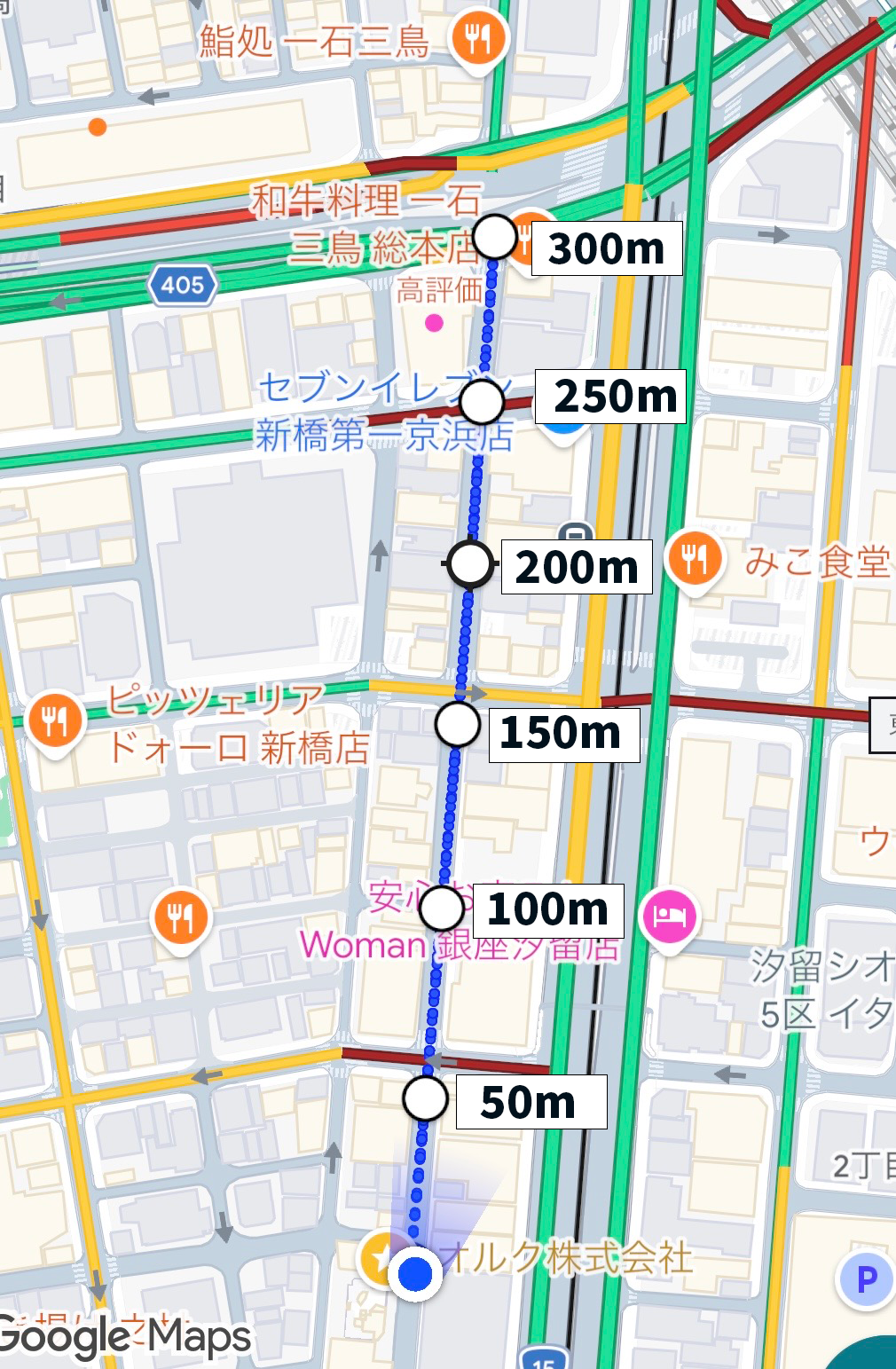
For this experiment, we moved 50 meters away from the OLQ Inc. office at regular intervals to intentionally create situations where radio interference occurred with the wireless microphone, and then verified whether the DR-10C functioned as a backup.
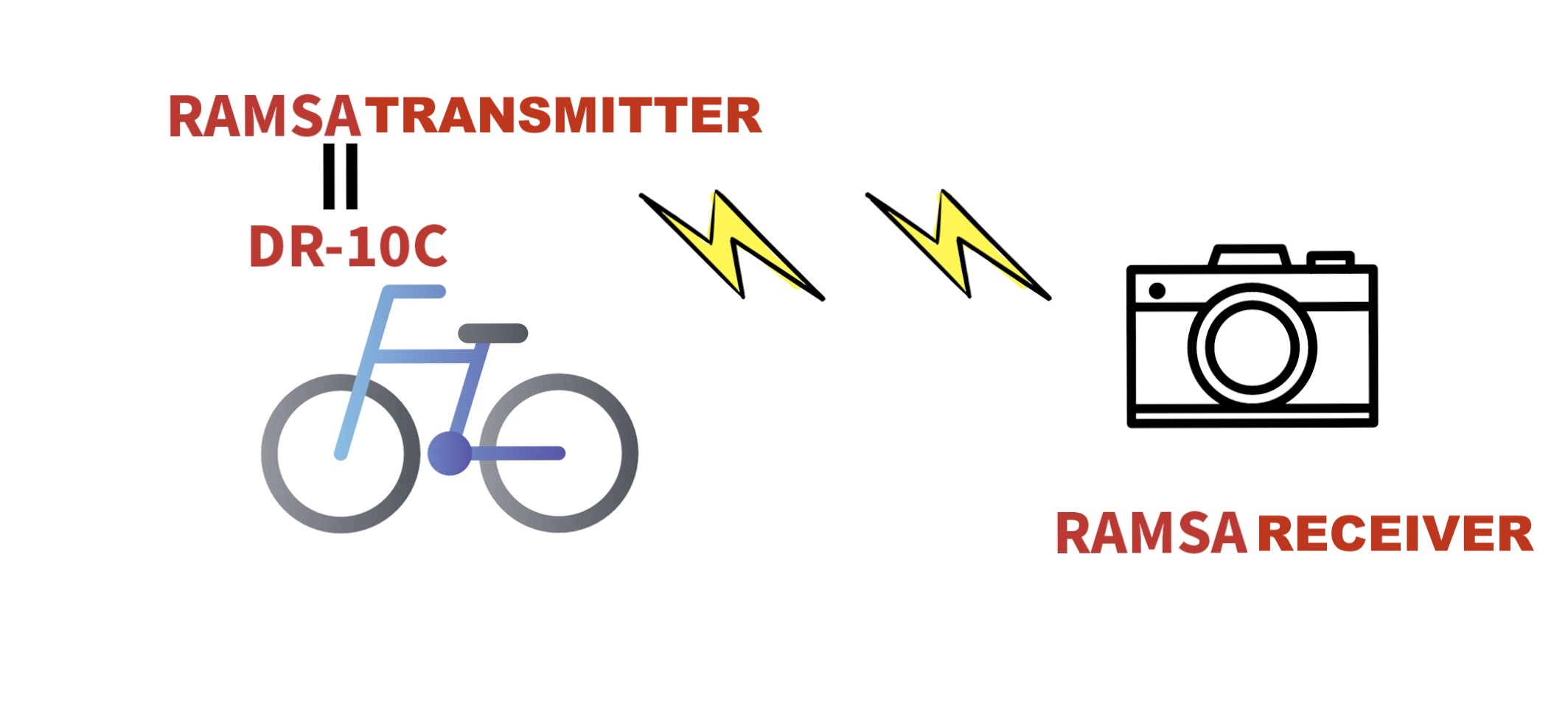
First, we will connect a RAMSA receiver to the camera, attach a wireless microphone (RAMSA transmitter) and a DR-10C to the subject riding the bicycle. Then, we will record the sound from the lavalier microphone, and finally compare the recorded sounds.
ーーーーーーーーーーーーーーーーーーーーーーーーーーーーーーーーーーーーーーーーーーーー
Now, let’s take a look at the actual data we collected.
First, let’s compare the sounds at the 50-meter mark.
DR-10C
RAMSA
Both sound crystal clear. At this location, the RAMSA wireless system seems to have more than enough range to carry the sound.
Next is the 100-meter mark.
DR-10C
RAMSA
We are still able to record sound from both sources at this location. The RAMSA wireless unit is still holding up well.
This is the 150-meter mark.
DR-10C
RAMSA
The audio from RAMSA has started to become unstable at this point. We're seeing interference caused by the distance.
The DR-10C is still recording clearly.
This is the 200-meter mark.
DR-10C
.
RAMSA
Once we reached this point, the difference became clear. Since my voice was coming from the lavalier mic, the RAMSA stopped picking up my voice entirely. It seems that 150 to 200 meters is the maximum recording range for the RAMSA’s wireless microphone.
The DR-10C recorded everything clearly.
This is the 250-meter mark.
DR-10C
RAMSA
By the time I reached 250 meters, the RAMSA wireless system could no longer pick up my voice at all.
Since the DR-10C recorded clearly, I think this demonstrates the peace of mind that comes with having a backup.
Due to the layout of the road, I could only go as far as about 300 meters this time, but I believe I would have gotten the same results if I had gone further.
ーーーーーーーーーーーーーーーーーーーーーーーーーーーーーーーーーーーーーーーーーーーー
The above is the data collected from this experiment.
Although this comparison was based solely on distance, having the DR-10C provides peace of mind because it allows you to back up your data even if there are obstacles like walls or other issues that arise.
When I actually tried wearing the DR-10C, I found that because it’s so compact and lightweight (dimensions: 52 × 55.6 × 24.4 mm; weight: approx. 51 g [unit only]), it doesn’t take up much space even when worn alongside the RAMSA transmitter.
I felt this was another highly recommendable feature.
Just a moment
That's all... huh?
I realized this while trying it out (or rather, I think this is something everyone’s wondering), but I started to wonder:
wouldn’t it be just as good to use a regular lavalier mic instead of the DR-10C?
OLQ Inc. also has a small lavalier microphone from TASCAM called the DR-10L, so I was wondering if I could use that as a backup as well... Well, since the principle is the same, you can indeed use the DR-10L for backup (though that would mean wearing two lavalier microphones...).
The DR-10C includes all the features of the DR-10L. This means that both the DR-10C and the DR-10L are capable of recording using a lavalier microphone.
The difference lies in their intended use.
The DR-10L is a lavalier microphone recorder that does not use wireless technology; it records directly to the DR-10L.
In other words, one drawback is that you cannot monitor the audio while recording.
The DR-10C is a recorder that connects between a lavalier microphone and a wireless microphone transmitter. Since the audio signal is transmitted to the wireless receiver, it allows for monitoring; in other words, it serves as an expansion unit for wireless microphones and acts as an auxiliary device during recording.
Summary
That wraps up this blog post on the DR-10C.
Since sound is crucial in certain video scenes, I highly recommend this equipment to anyone who feels uneasy about recording with wireless microphones!
Actually, not many people rent this equipment, so if you're interested, please feel free to rent it!
Well, thank you very much. See you in my next blog post (maybe the one after the one after the next one). This was Katsuo at your service.
Bye-bye 👋
ーーーーーーーーーーーーーーーーーーーーーーーーーーーーーーーーーーーーーーーーーーーー
OLQ Inc. offers a wide selection of video, audio, and other equipment for rent!
If you are considering using our services for the first time, please visit our e-commerce site, register as a member, and fill out the required fields.
Feel free to contact us even if you just want to discuss equipment rental options!