


オルクログ BLOG
2026.07.27
Do you use a wireless video transmission system? Part 1 #DJI SDR Transmission Combo
Hello, this is Matsuzaka from olq.
Let me start with a quick question: do you use awireless video transmission systemin your productions?
In today's film industry, especially on large productions or one-person shoots where monitoring is essential, wireless video transmission has become almost standard equipment.
In this article, we'll take a closer look at how wireless video transmission technology has evolved, what kinds of systems are currently available, and the basic principles behind how they work.
How does it work?
To understand the topics covered in this article, it's helpful to know the basic principles behind wireless video transmission. But don't worry, we'll keep it brief, since you can find more detailed explanations online.
〈A video transmitter wirelessly sends and receives video signals using radio frequencies, typically within the same frequency bands used by Wi-Fi.
The camera is connected to the transmitter using a short HDMI or SDI cable. The video signal is compressed (encoded) and transmitted over a frequency band, such as 5 GHz, to the receiver.
Once the receiver gets the signal, it decompresses (decodes) the video and outputs it to a monitor or display.〉
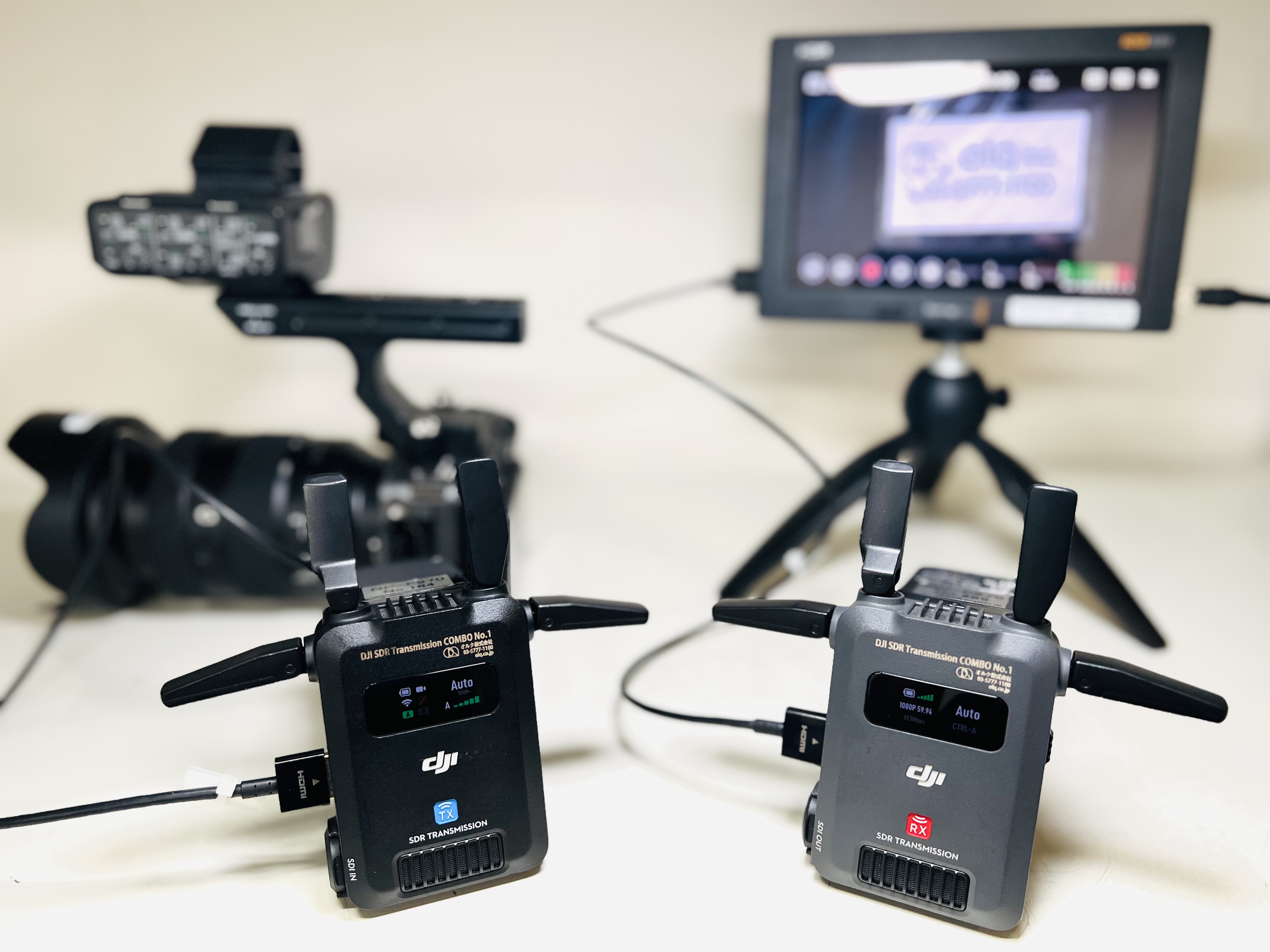
Normally, when monitoring footage during a shoot, the camera is connected directly to a monitor via an HDMI cable or through an SDI converter. Most people are probably familiar with this setup.
However, as productions become larger, the distance between the camera operator and the monitoring station increases, requiring much longer cables.
This is exactly where a wireless video transmission system proves its value!
Wireless systems are quick to set up; simply match the channels on the transmitter and receiver, and you're ready to go. This improves workflow efficiency while eliminating the hassle of managing long cables during setup and teardown. It is equipment designed with real production environments in mind.
Key Points About Wireless Video Transmission
Of course, being wireless doesn't mean there are only advantages.
Because these systems rely on radio signals, their performance is affected by the surrounding environment. Before putting one to the test, let's first review the main factors that influence wireless transmission.
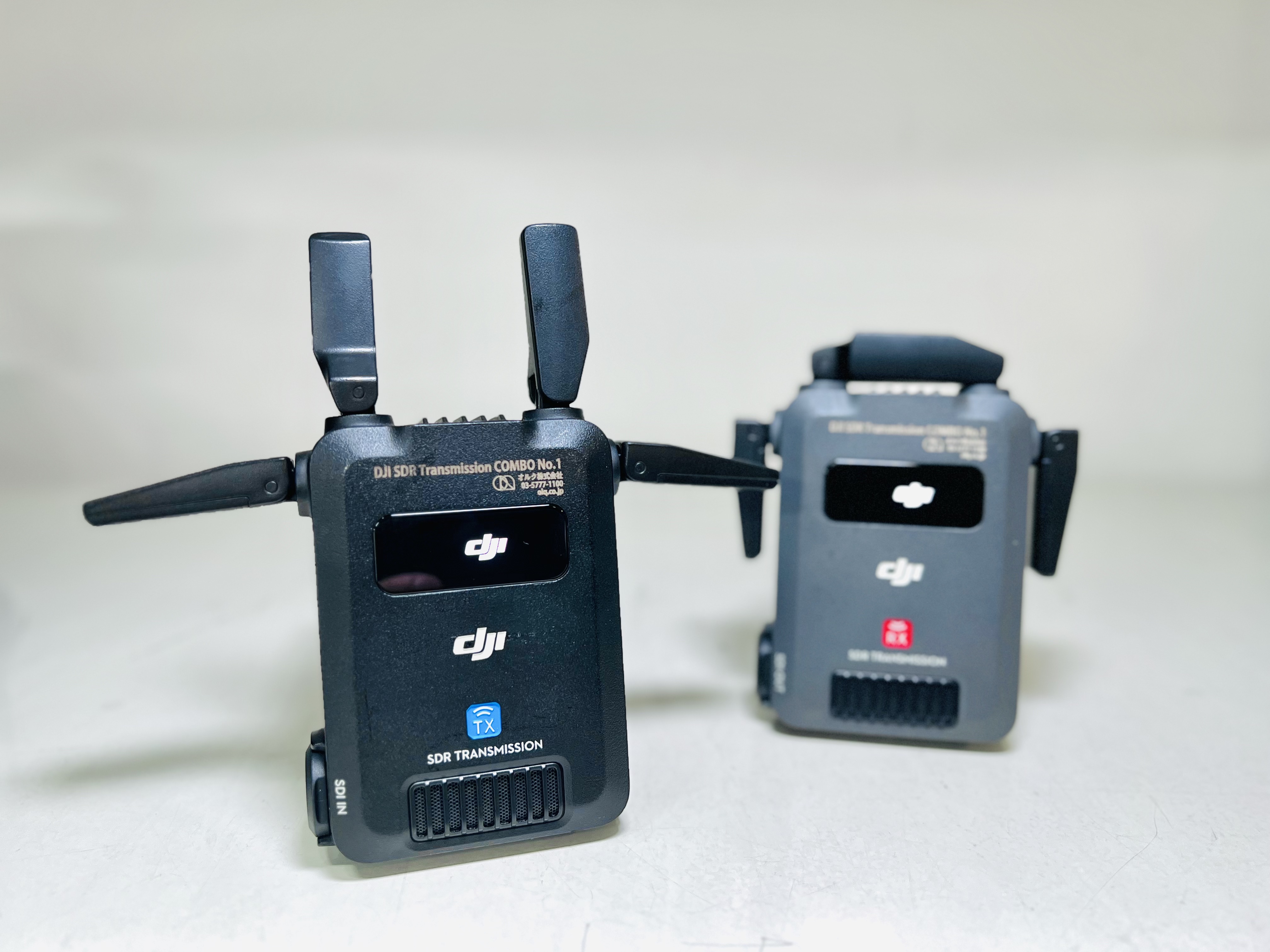
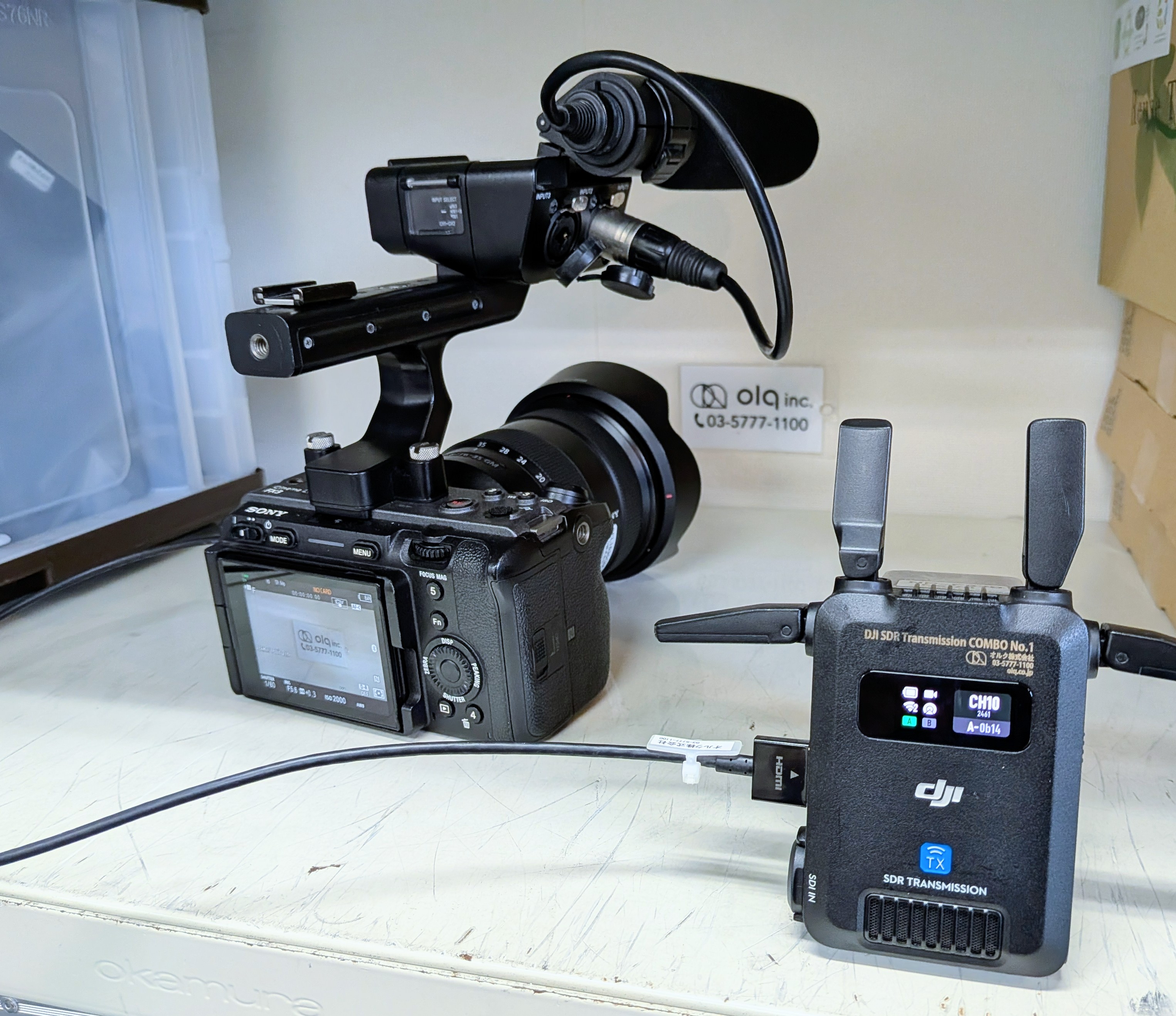
The unit shown above is DJI's wireless video transmission system, released in 2024.
Its compact design, lightweight construction, and exceptional cost-performance ratio compared with traditional wireless transmission systems have made it a highly popular product.
At olq, it's one of our most frequently rented items, which speaks volumes about the confidence professional filmmakers place in it.
Below are its main specifications!
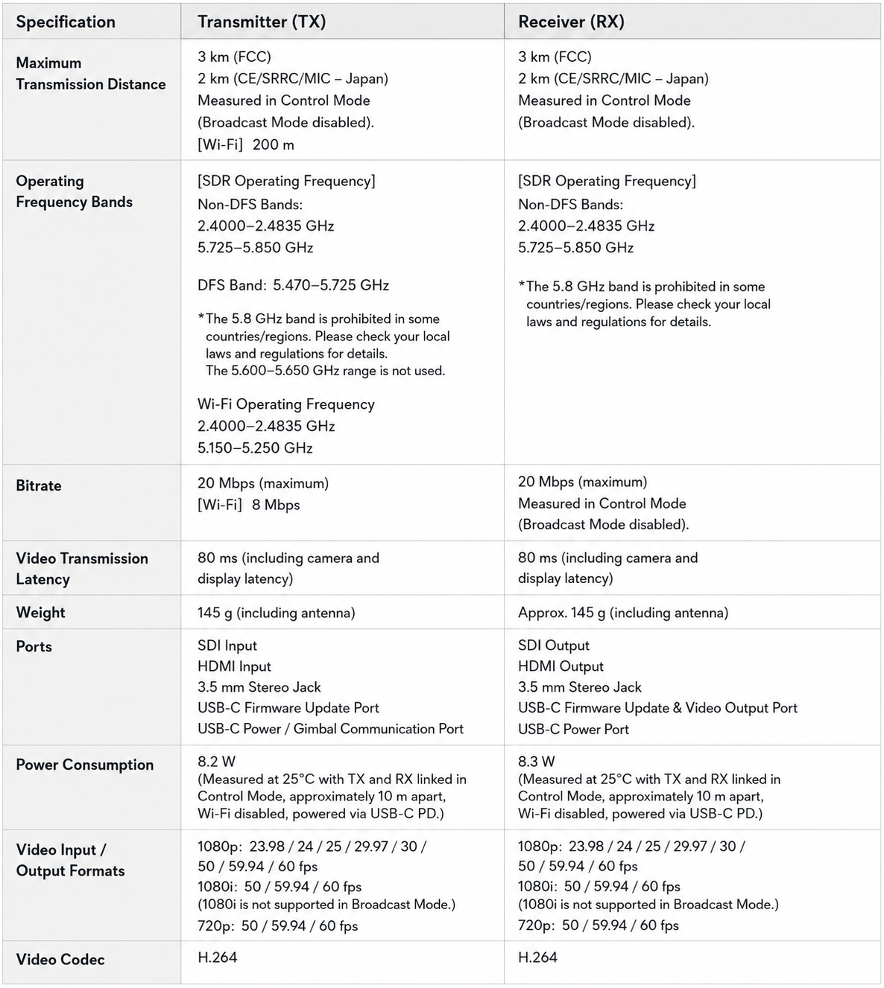
Looking at a long list of specifications can be overwhelming... and to be honest, it doesn't tell you much at first glance.
Don't worry, we'll explain everything step by step.
As mentioned earlier, wireless video transmission systems operate using specific radio frequency bands.
As shown in the specifications of【Operating Frequency Bands】, the DJI SDR Transmission Combo uses both the 2.4 GHz and 5.8 GHz frequency bands.
These are the same frequency bands most people are familiar with from everyday Wi-Fi networks.
Both of these bands belong to what are known as non-DFS frequency bands.If that term sounds confusing, let's break it down.
DFS(Dynamic Frequency Selection)is a technology designed to make more efficient use of the 5 GHz spectrum by allowing wireless devices to temporarily use portions of the band that are also shared with systems such as weather radar.
In Japan, parts of the 5 GHz frequency range are shared with satellite communications and meteorological radar systems.
When a device operating on a DFS channel detects radar activity, it must automatically switch to another available frequency to prevent interference.
DFS is activated → Forced frequency change → A brief interruption in transmission.
Since the 2.4 GHz and 5.8 GHz frequency bands used here do not share channels with weather radar or similar systems, the DFS function is not required.
This is why they are referred to as non-DFS frequency bands.
The Strength of "SDR" and "DFS"
In fact, the "SDR" in DJI SDR Transmission is what makes this product so appealing.
SDR (Software Defined Radio) is a technology that optimizes wireless communication through software.
DJI is a manufacturer at the forefront of the drone industry, and this same SDR technology has been incorporated into products such as the DJI SDR Transmission system.
If interference occurs on the 2.4GHz band, the SDR function immediately switches to another frequency.
↓
5.8GHz band
↓
Interference
↓
Switches to yet another frequency band...
〈By continuously detecting frequenciesーpredicting interferenceーswitching frequencies〉the system seamlessly changes between channels, providing excellent interference resistance, high image quality, and long-distance video transmission. It also prevents the "brief interruption during channel switching" that is typically associated with DFS.
In other words, you could say that"SDR is the brain that makes full use of DFS".
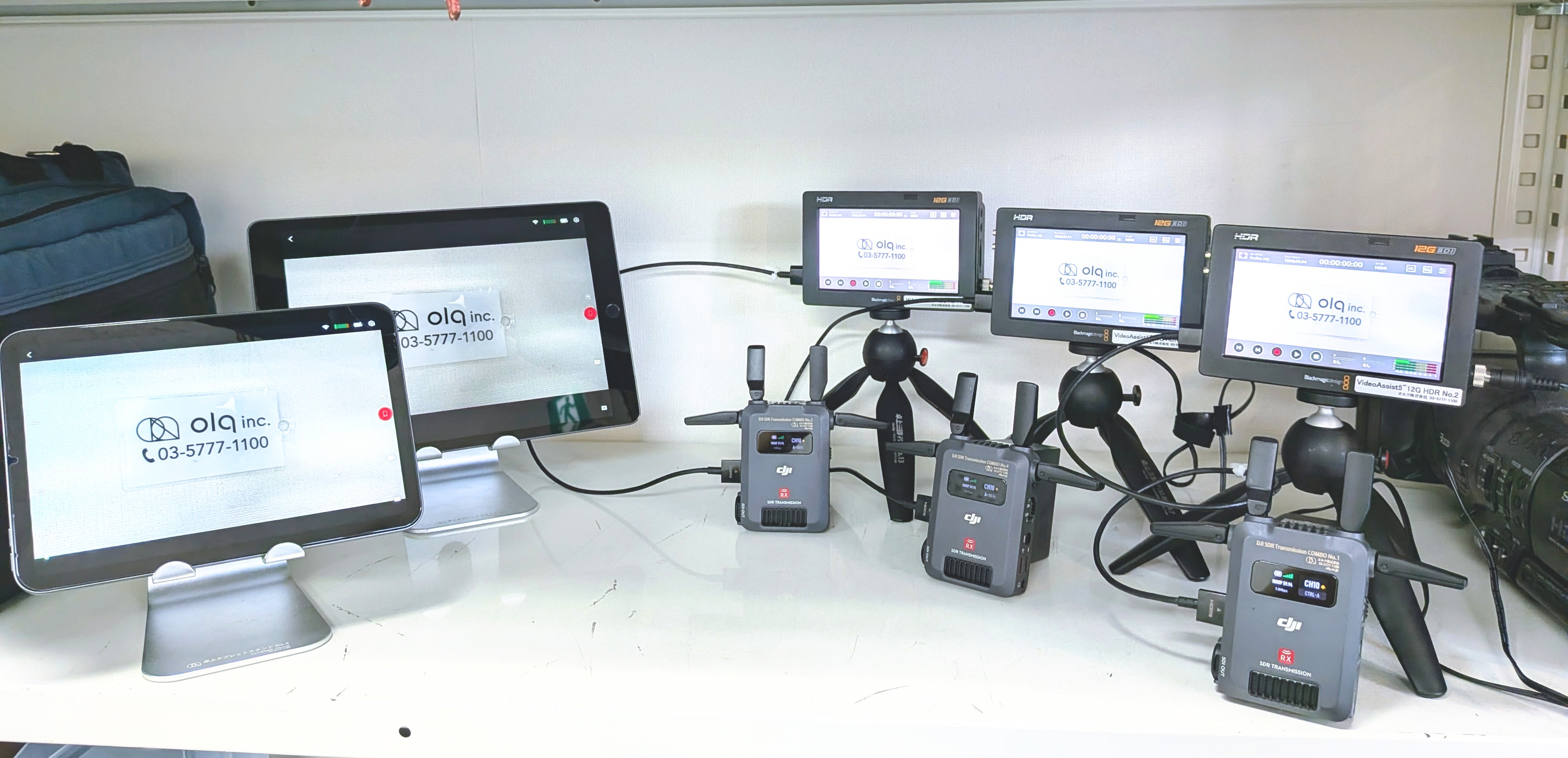
Additionally, in Broadcast Mode, there is no limit, to the number of receivers that can be connected to a single transmitter, allowing virtually unlimited monitoring.
The receiver can be linked not only through the three SDR transmission signals, but also via the Wi-Fi signal generated by the transmitter, which can be accessed by scanning a QR code. By installing the DJI Ronin app on your tablet or smartphone, you can monitor the video feed directly on your device.
The receiver is also equipped with a USB Type-C output port, allowing you to connect it directly to a tablet or smartphone for monitoring.
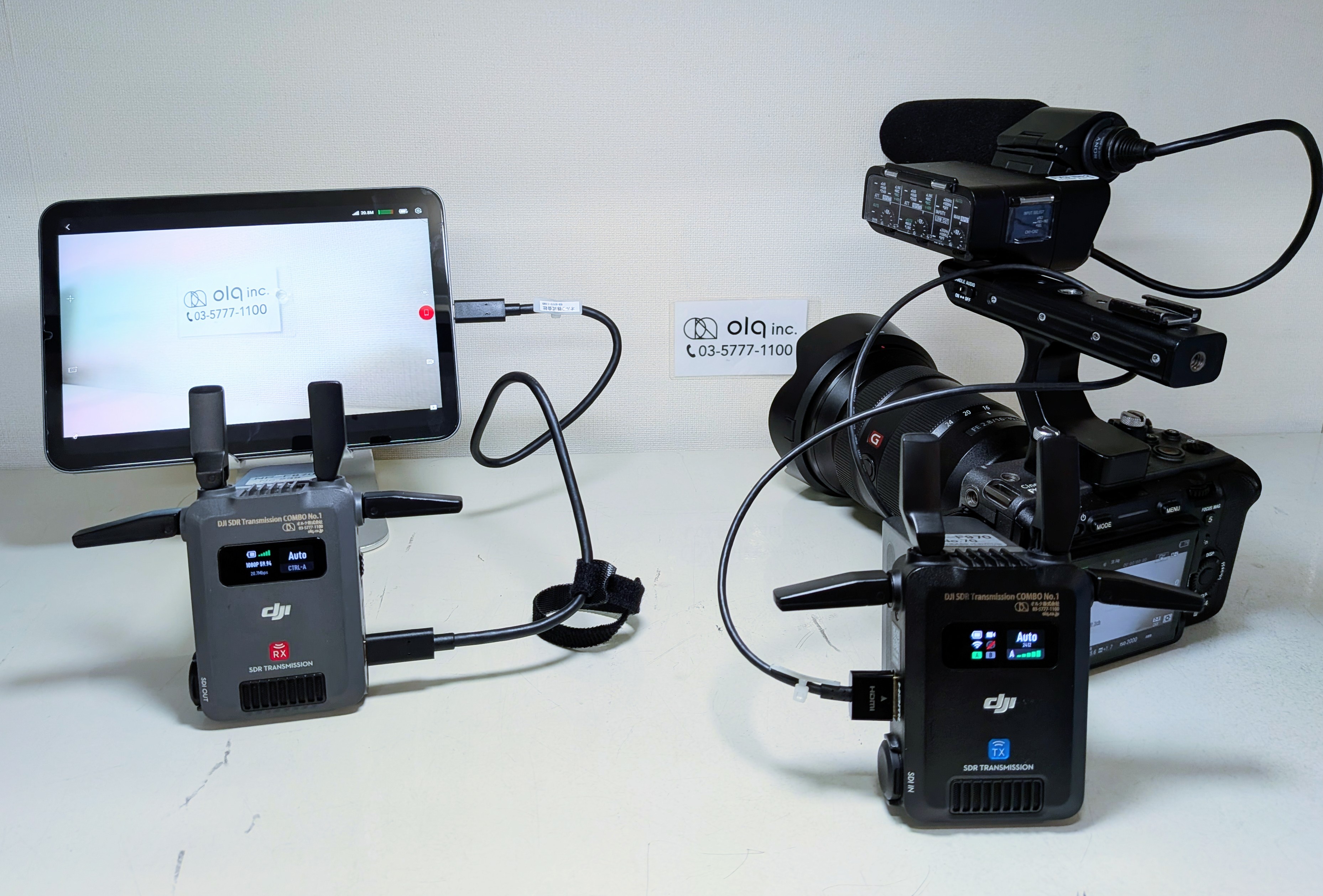
However, it is important to remember that the specifications listed are only theoretical values.
The maximum transmission distance can only be achieved under ideal conditions, such as a clear line of sight with no obstacles and a stable wireless environment.
With that in mind, we conducted tests in 3 different scenarios, focusing on transmission distance.
◉Area with few people
Our first test was conducted on a flat road to see how far the signal could be transmitted.
We have a video from a previous test, so please take a look!
We repeated the same test on another day under similar conditions, and the results were overall consistent.
In this environment, the video began to flicker at around 60 meters.
At approximately 90 meters, the system started lowering the image quality to prioritize transmission distance.
Finally, at around 130 meters, the signal blacked out completely.
Even so, we were impressed by how long the transmission held on and by the overall range it achieved.
◉Crowded Area
So, how does it perform in a crowded environment?
The 2.4 GHz band has a longer wavelength, giving it better penetration through obstacles, but it is also more susceptible to interference. On the other hand, the 5 GHz band offers greater bandwidth, but because its wavelength is shorter, it is more easily weakened by walls and other obstacles (although this may vary depending on the environment).
So, how would the Transmission Combo, which uses both frequency bands, perform?
After exiting the JR Shimbashi Station North Exit, two exits lead toward the Hibiya Exit (SL Square) and the Ginza side, connected by a tunnel-like passageway.
Since many people pass through this area, we decided to walk approximately 100 meters in a straight line while testing the transmission.
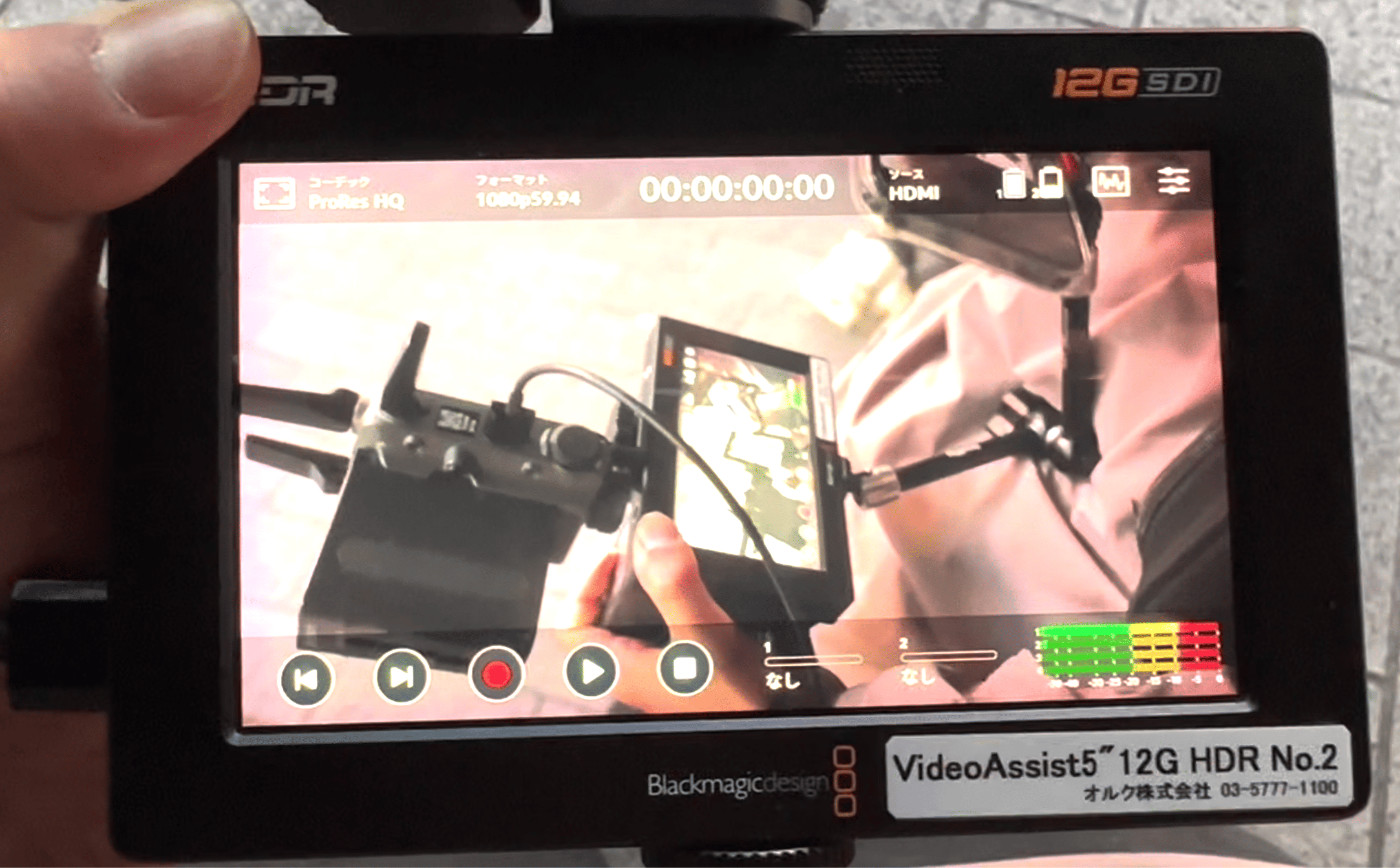
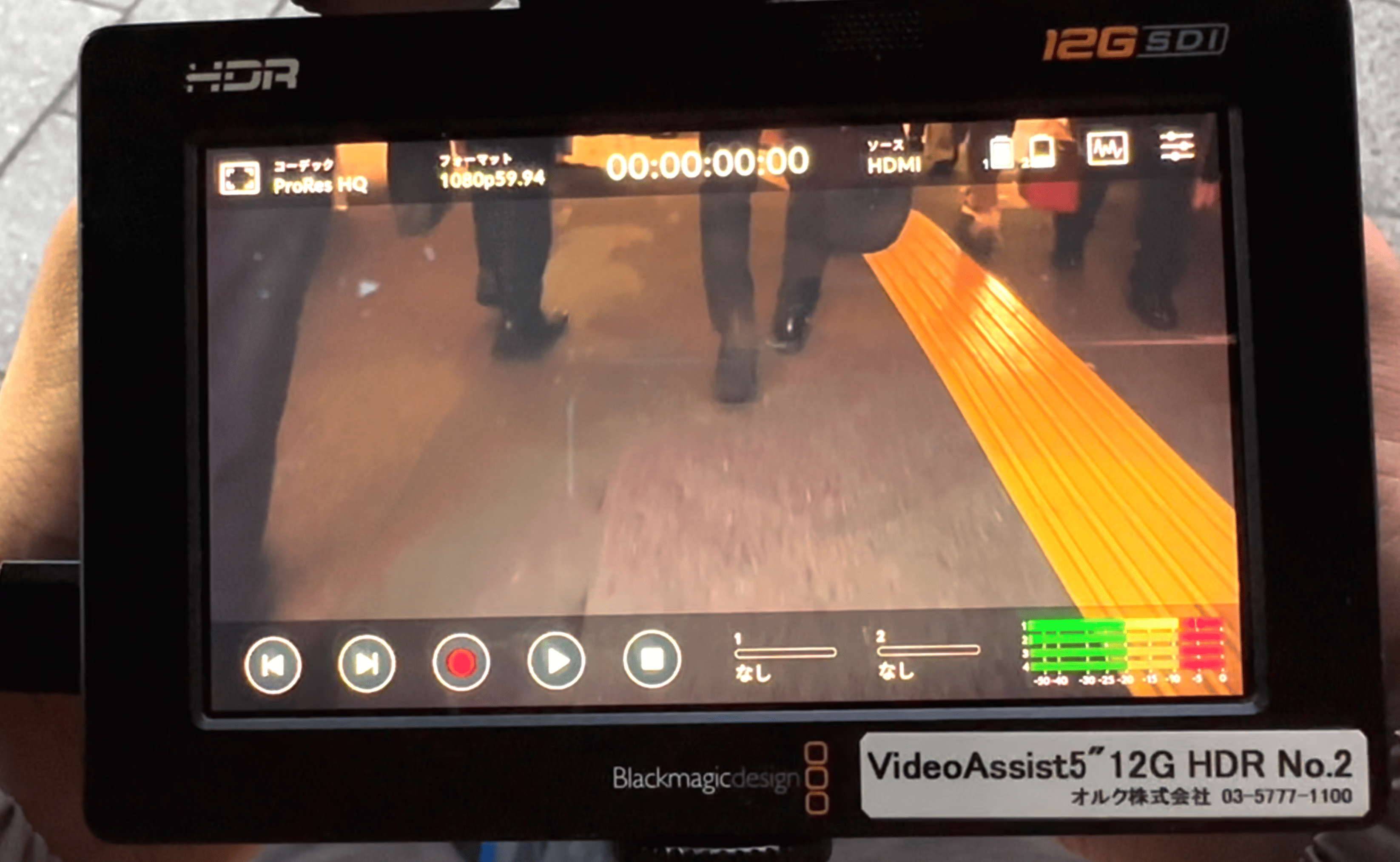
Around 30〜50 meters, the image quality began to decrease.
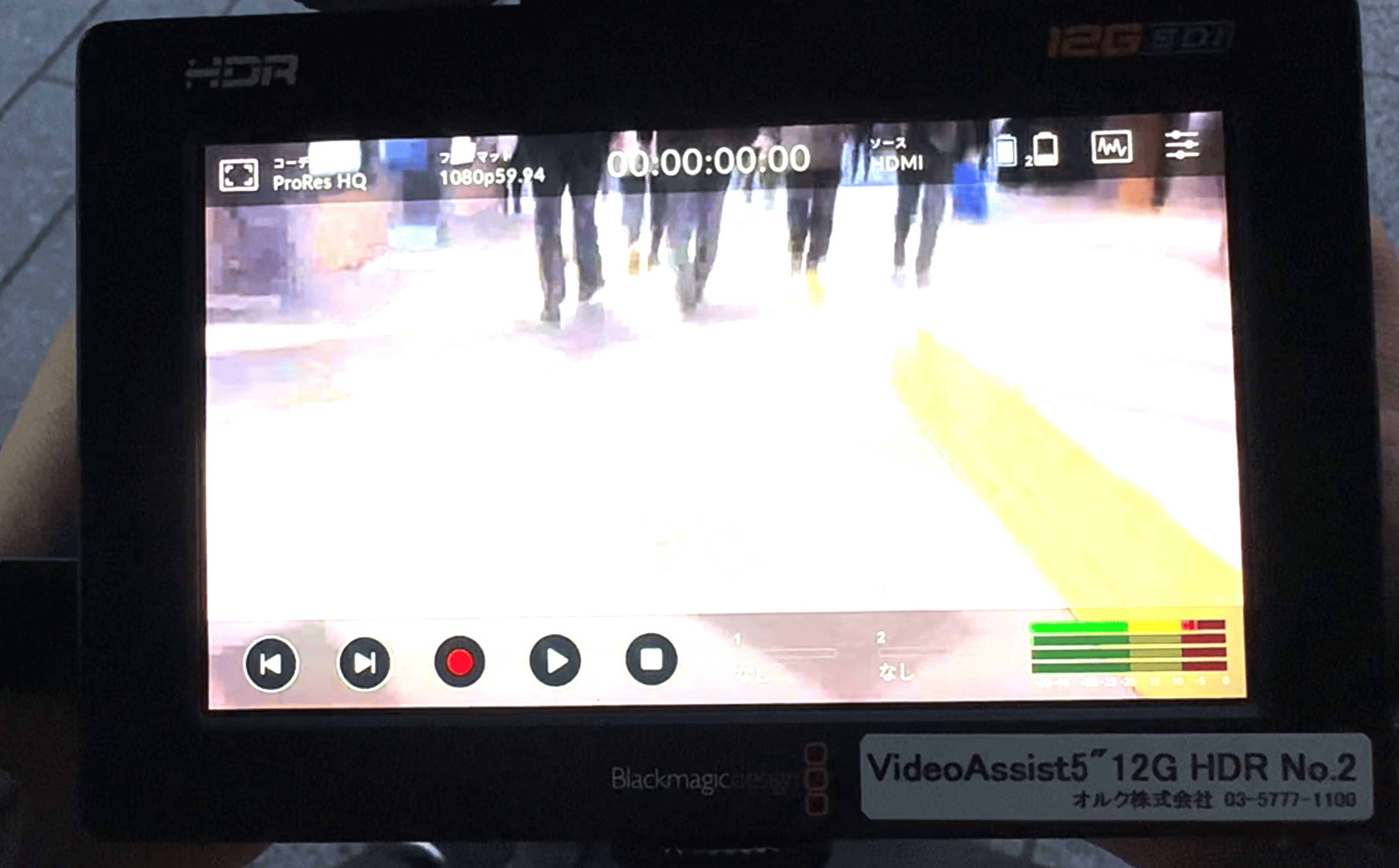
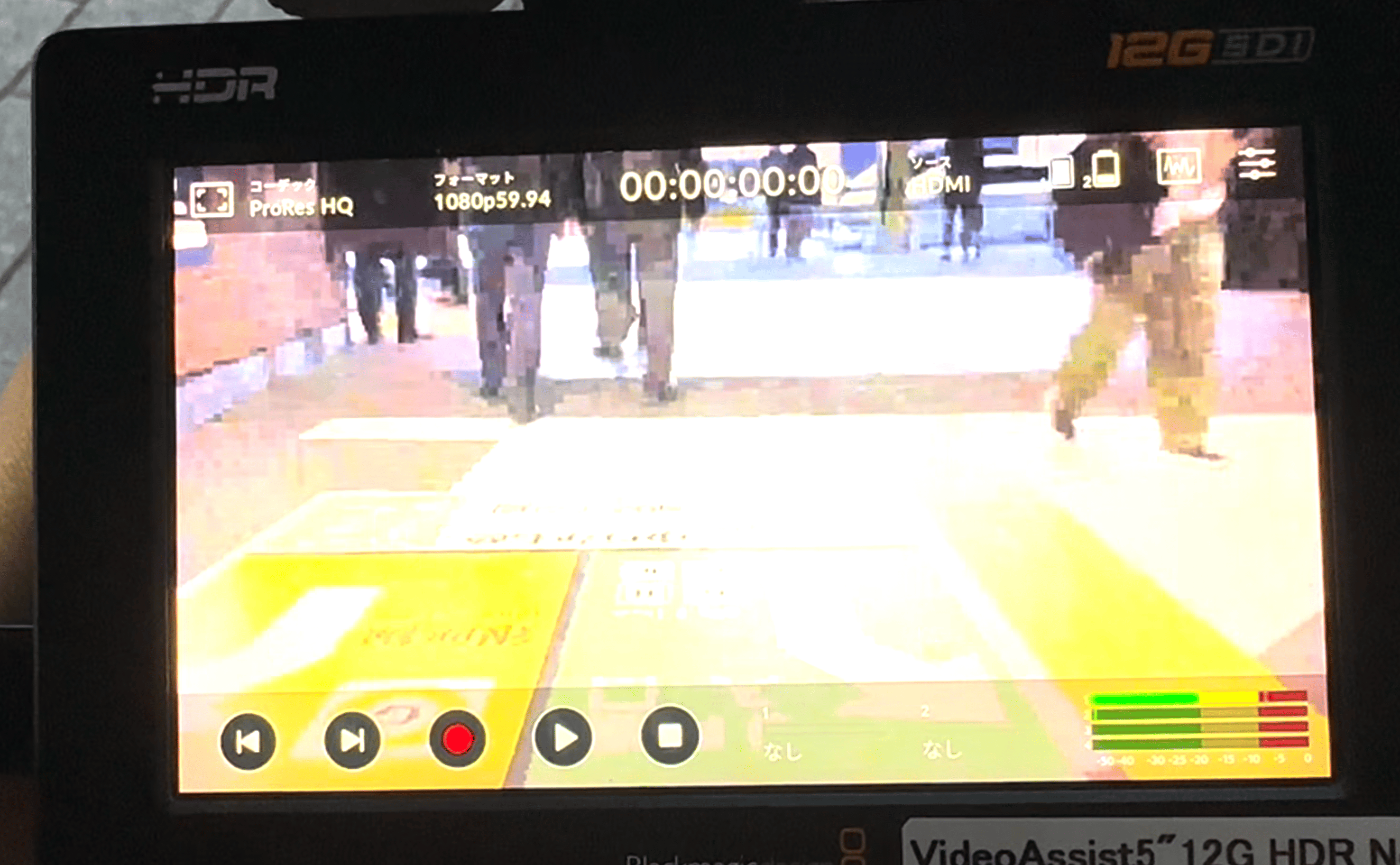
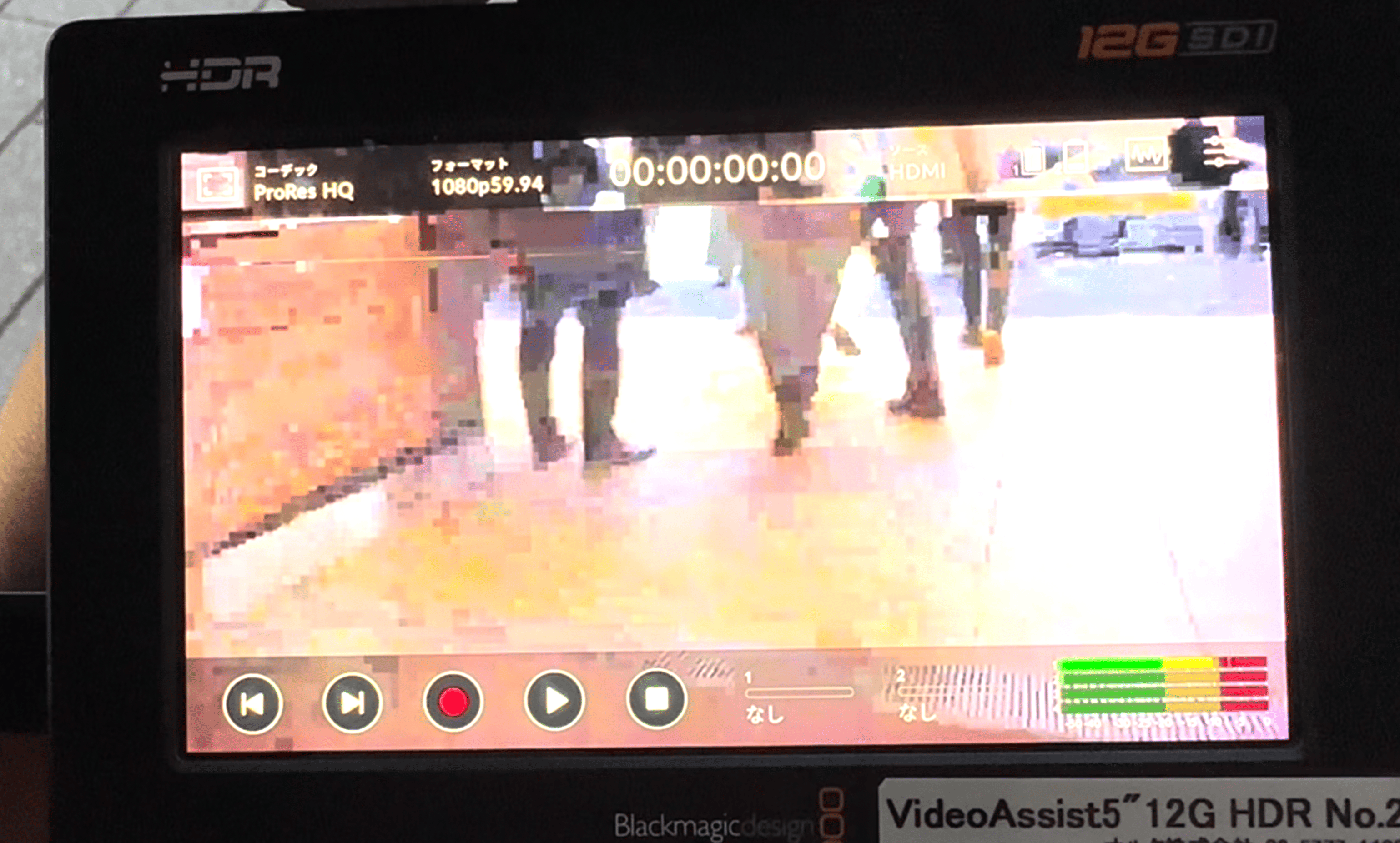
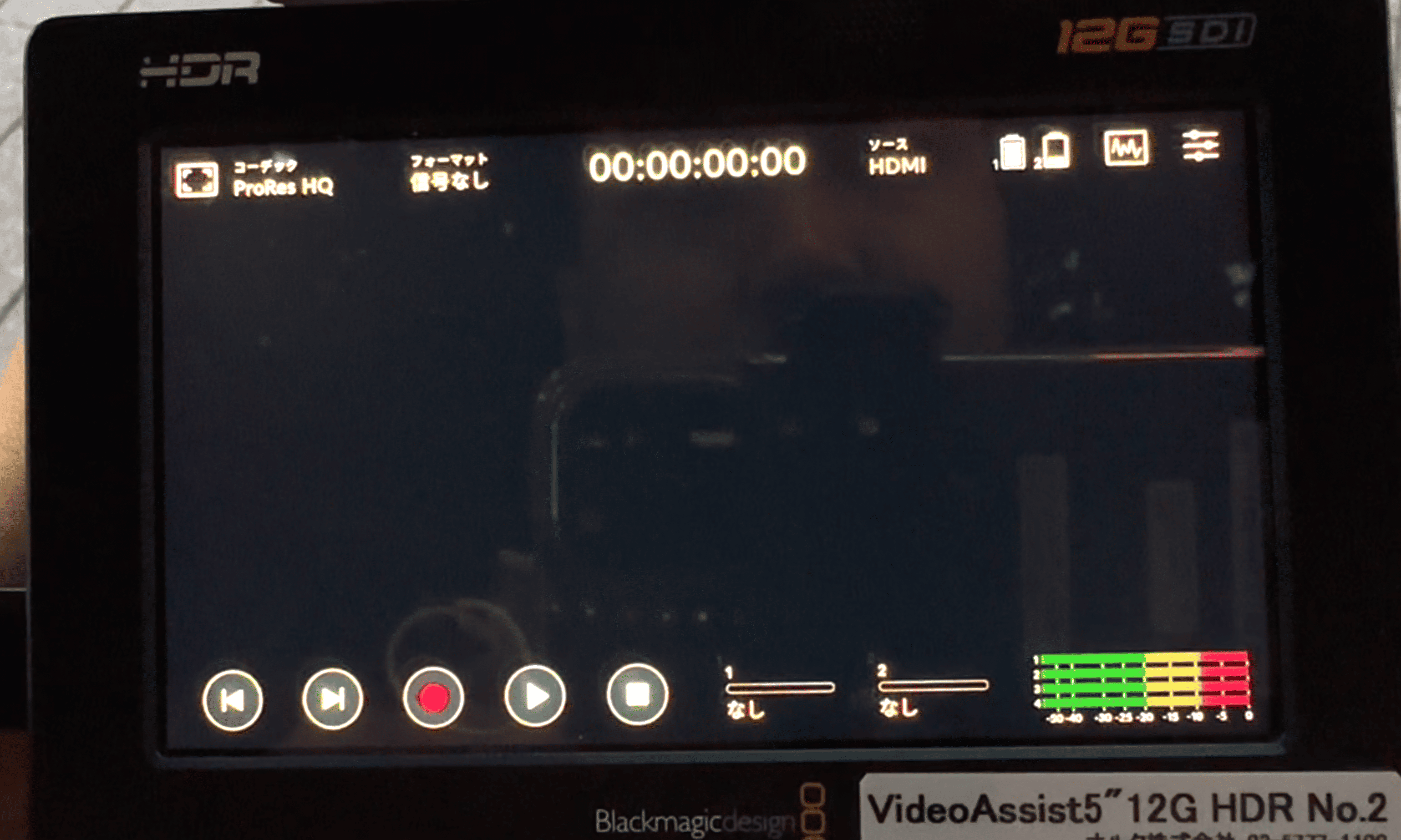
On the return trip, the video signal was restored at around 20 meters from the starting point, although it took slightly longer than expected to reconnect.
As anticipated, environments with large crowds are more prone to signal interference. Combined with the tunnel-like surroundings, this created particularly challenging conditions.
We then moved to SL Square to continue testing.
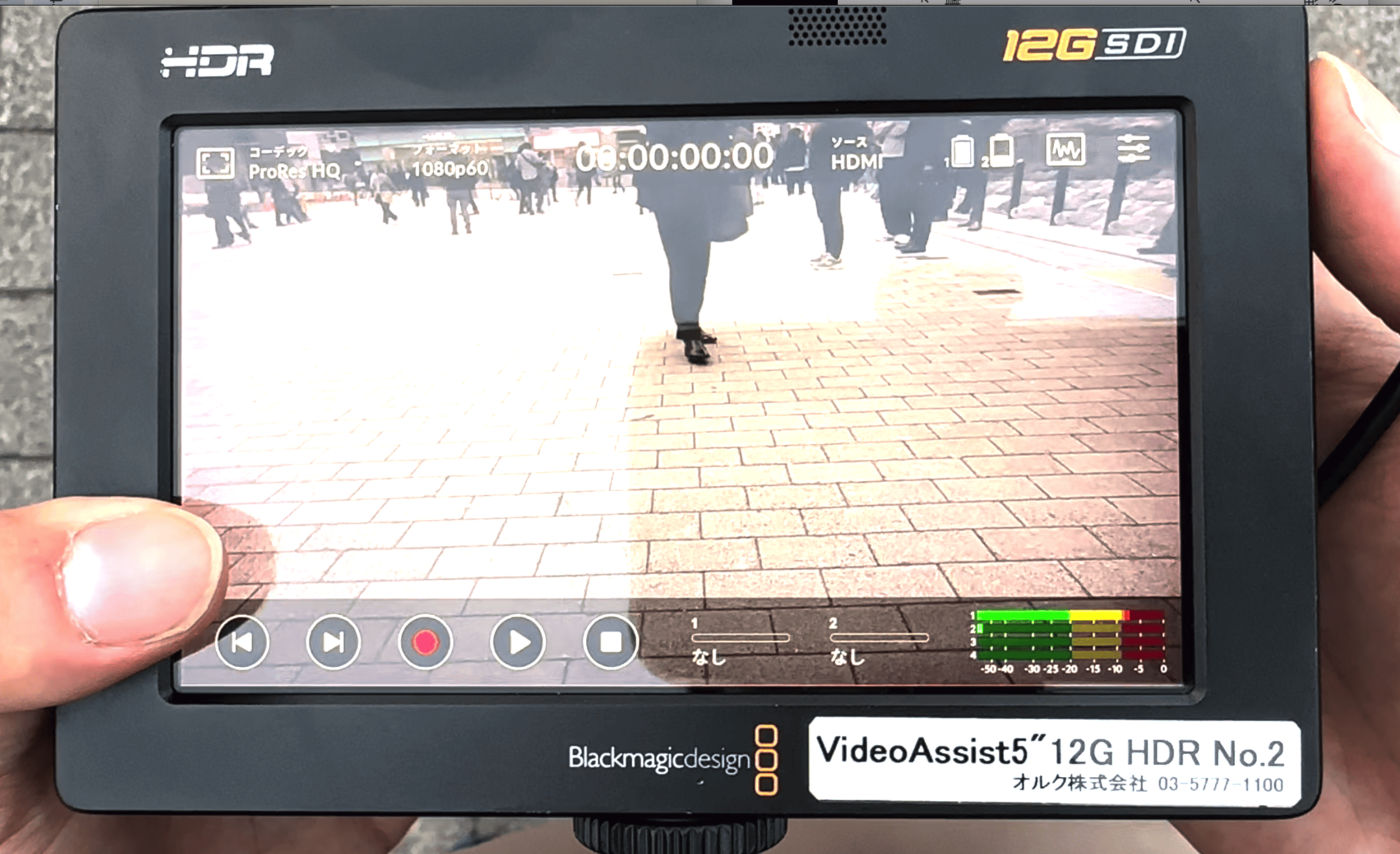
Since the area was much more open, transmission remained stable over a straight-line distance of approximately 50–60 meters.
However, when we walked around the perimeter, we occasionally noticed image flickering and brief moments of latency.
This suggests that even in an open area, heavy foot traffic may still contribute to wireless interference.
◉What about height?
As an additional test, we also wanted to see how the system would perform when transmitting from an elevated position down to ground level.
Unfortunately, we couldn't find a location suitable for testing from a greater height, so we conducted the test from approximately the third floor of a building (about 15 meters high).
The result? Transmission worked without any issues.
Since the environment was open, we experienced no noticeable latency, image degradation, or other problems. We'd like to test it from an even greater height in the future.
What did you think?
In urban areas surrounded by buildings or in crowded environments, wireless communication becomes less stable, and image quality can deteriorate even over relatively short straight-line distances.
However, there have been reports from various media outlets showing that, under ideal conditions with a stable wireless environment and a clear line of sight, transmission distances of 2–3 kilometers have been achieved.
The technology that intelligently extends transmission distance, even by lowering image quality when necessary, is one of this system's greatest strengths. Combined with its excellent compatibility with the DJI Ronin ecosystem, it's easy to see why DJI products complement one another so well.
After using it ourselves, we could appreciate how DJI has created an ecosystem in which its products work seamlessly together, making them a popular choice on professional production sets.
Whether it's drones or wireless video transmission systems, DJI's transmission technology will undoubtedly continue to play an essential role in increasingly advanced filming environments.
That concludes our look at the DJI SDR Transmission Combo.
In the next installment, we will introduce a new wireless transmission system that has recently arrived at olq, one that may even outperform the Transmission Combo. We will compare both systems under the same testing conditions...!
Stay tuned!
At Olq inc., we offer rentals for a wide range of video, audio, and production equipment.
If you're considering using our rental service for the first time, please register as a member through our EC website and complete the required information.
Even if you'd simply like to discuss your equipment rental needs, feel free to contact us anytime. We're always happy to help!

〒105-0004
1st floor, Dai-ni Shin-yo Building, 6-10-2 Shimbashi, Minato, Tokyo
TEL: 03-5777-1100
FAX: 03-5777-1101