


オルクログ BLOG
2026.09.02
Do you use a wireless video transmission system? Part 2 #Accsoon Cine view SE
Hello, this is Matsuzaka from Olq.
Following up on my previous blog post, this article focuses on video transmission equipment.
If you haven’t read the previous article yet, tap the image below to check it out!
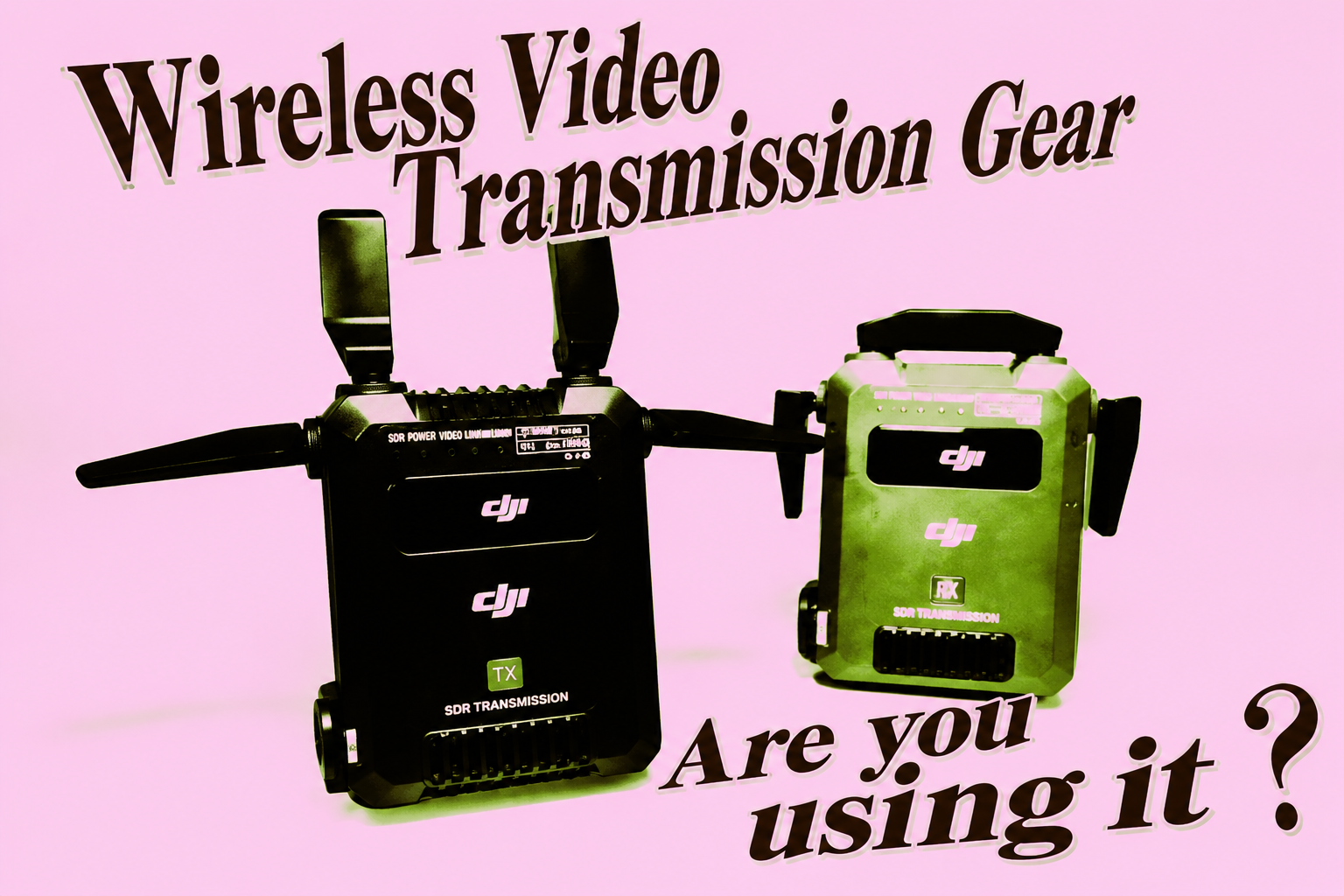
Now, regarding the DJI SDR Transmission Combo I introduced last time, the results varied significantly depending on the environment.
Speaking of video transmission equipment, a new model we received this year was impressive in so many ways, so I decided to compare it with the previous one!
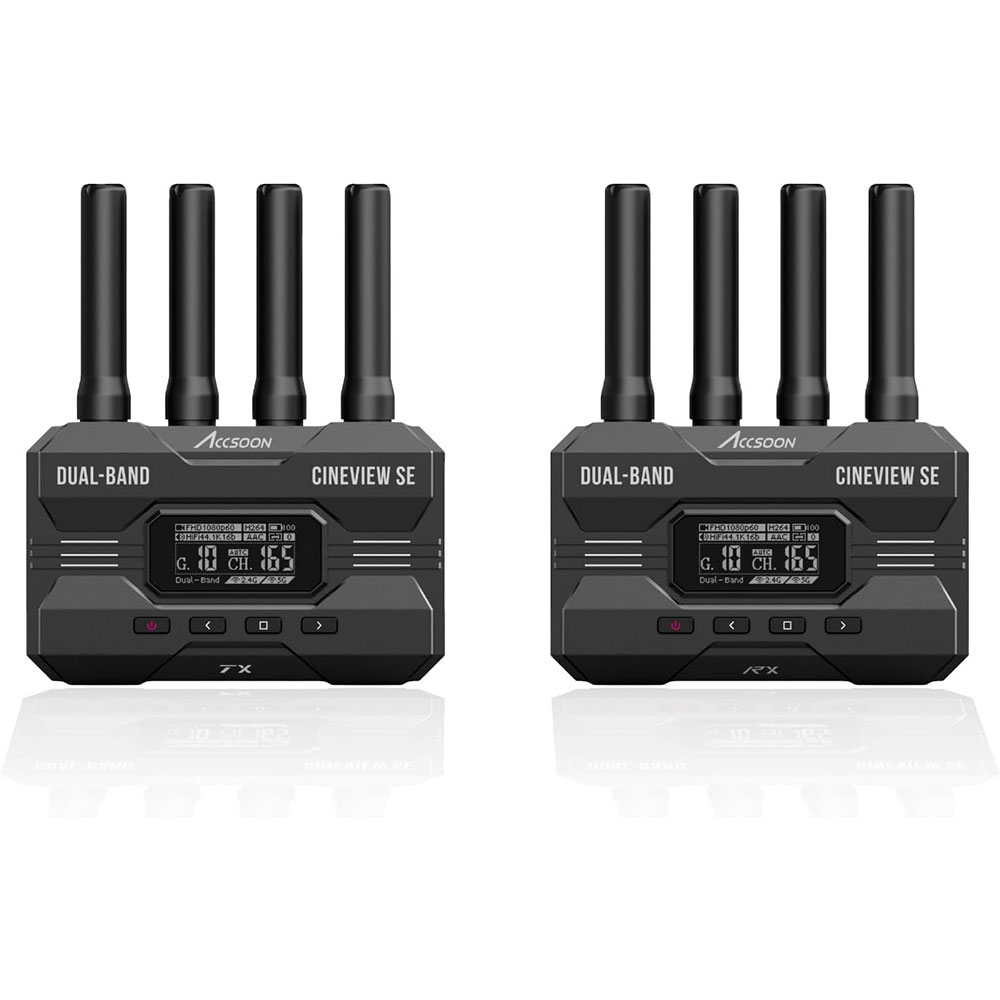
Released around late October 2022. Although some time has passed since its release, it isn’t widely known in the industry, so the DJI SDR Transmission Combo we introduced previously may be more familiar to you. The specifications are below.
We've also included the spec sheet for the DJI SDR Transmission Combo, so let's take a look and compare them!
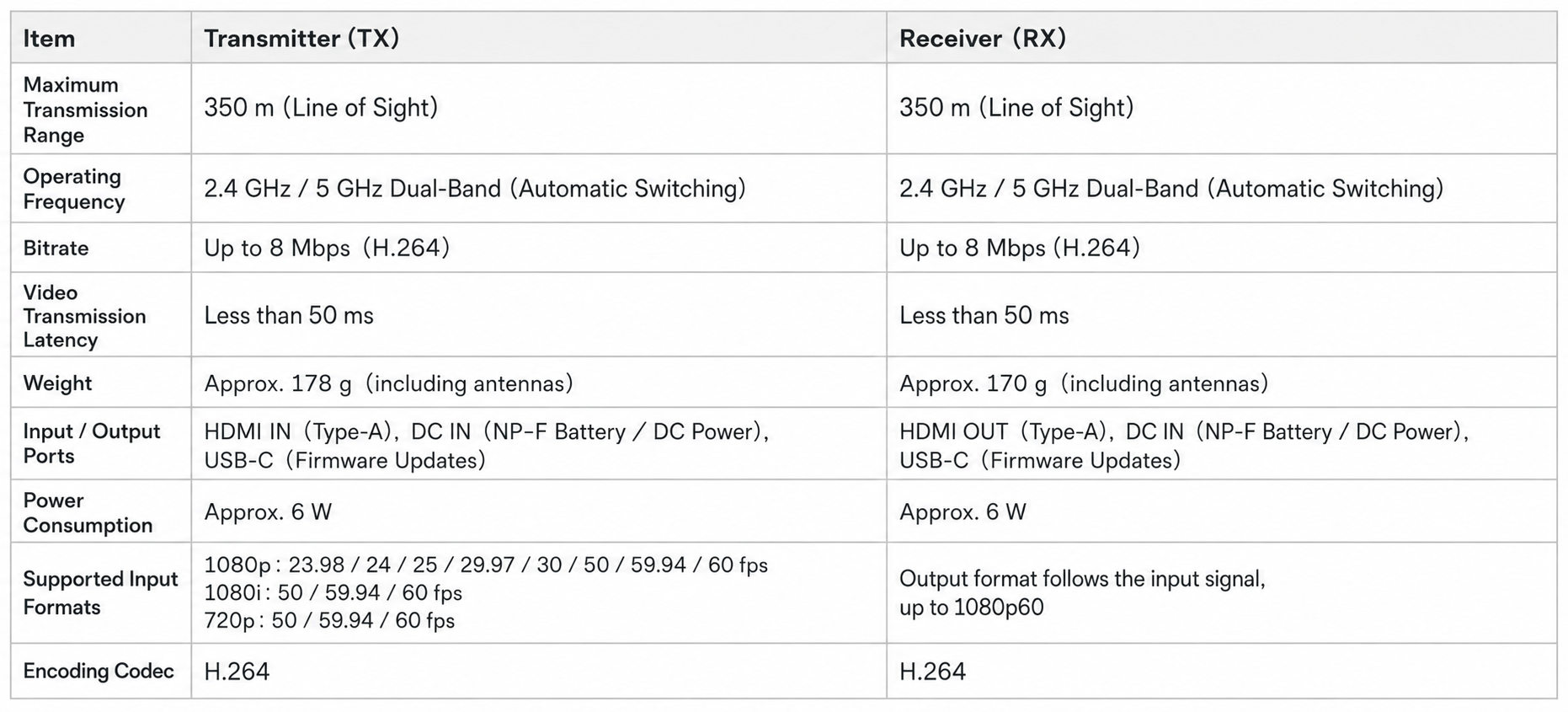
DJI SDR Transmission Commbo ↓
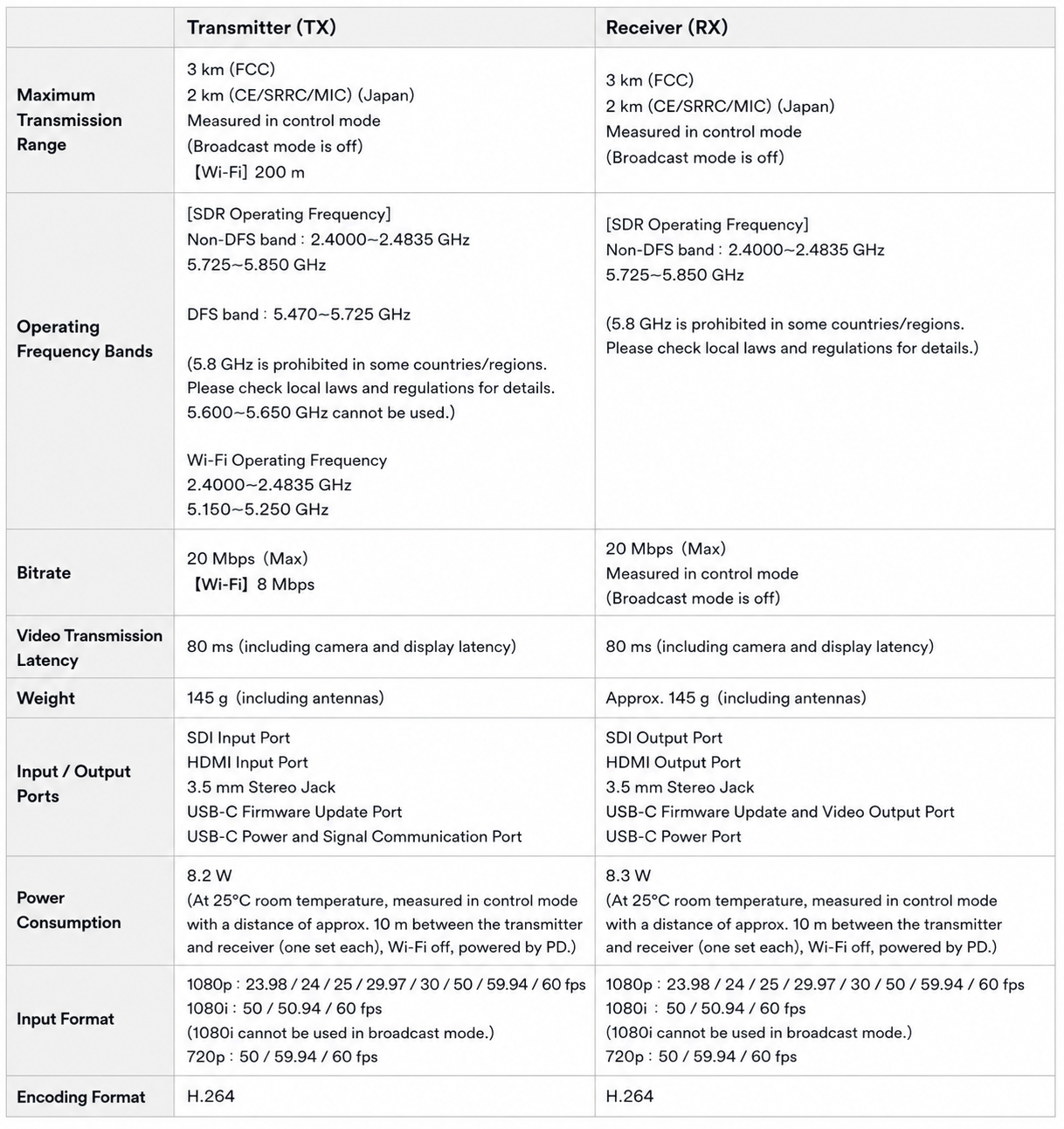
There are a few major differences, aren't there?
・Maximum Transmission Distance
First, regarding transmission range: while the DJI SDR Transmission Combo has a range of 3 km, the Accsoon CineView SE has a range of 350 m.
These are maximum values without considering actual usage conditions, but since a longer range is always better, this is a bit concerning...
I conducted the same experiment as last time, so let’s take a look at the results later.
In simple terms, video transmission delay can be defined as the time gap that exists from the moment images are captured until they appear on the screen.
Since 1 ms (millisecond) = 0.001 seconds,
CineView has a delay of 50 ms =0.05 seconds.
The DJI SDR Transmission Combo generally has a latency of [80 ms = 0.08 seconds], so the difference is 0.03 seconds.
It’s usually hard to notice this difference, and to be honest, I don’t think there’s much of one.
However, when you look at the actual numbers, a 0.03-second difference is significant, isn’t it?
Incidentally, I did test them on a real-life device, and personally, I would say that the Accsoon CineView SE worked better, or at least I had the feeling that the video reproduced motion accurately!
・The cooling fan is quiet!
There were also some discrepancies with the DJI SDR Transmission Combo that could not be seen from the specification sheet.
One of these discrepancies is that the cooling fan is much quieter than the one on the DJI SDR Transmission Combo.
As you can hear in the video, the fan on the DJI SDR Transmission Combo makes a fairly loud “b-ooon” sound.
Looking at power consumption, the Accsoon CineView SE draws 6W, while the DJI SDR Transmission Combo draws 8.3W, which perhaps is to be expected given its higher energy consumption.
In return for high performance, which includes long-distance communication and an unlimited number of registered devices, the cooling system is tasked with quite a job.
It might be a bit unfair to compare the two, but in a good way, it’s virtually silent.
The fact that no noise is picked up during filming is a huge benefit for post-production.
_______________________________
The Accsoon CineView SE supports up to four connected devices, which can be monitored via the dedicated app.
In terms of the number of connected devices, the DJI SDR Transmission Combo is by far superior, but I don’t think more is necessarily better, so it really depends on the situation.
Patented Dual-Band
Now, this is where the DJI SDR Transmission Combo really stands out.
Let me explain "DUAL BAND", which truly showcases the full potential of Accsoon’s technology.
(Referenced and quoted from Accsoon product information below)
Traditional Wi-Fi systems suffer from issues such as excessive latency and susceptibility to interference.
No matter how well a traditional Wi-Fi connection is implemented, it will always be subject to interference in complex wireless environments.
Wi-Fi operates on two frequency bands: 2.4 GHz and 5 GHz. The 2.4 GHz band has a longer wavelength, so it reflects off and passes through surfaces and walls well, but it has a lower data rate. The 5 GHz band has a shorter wavelength, so it offers greater bandwidth; however, these higher frequencies have a shorter range and are more susceptible to interference from obstacles.
That’s where Accsoon’s patented dual-band technology comes in to solve this problem.
The Accsoon dual-band system essentially transmits the same video frame simultaneously on two frequencies: 2.4 GHz and 5 GHz.
The receiver is also configured to receive signals on both frequencies simultaneously. Due to the physical characteristics of radio waves, it is difficult for a single source of interference to affect two connections operating in very distant frequency bands.
By transmitting the same information simultaneously on two frequency bands, the likelihood of both bands becoming congested and experiencing excessive interference is significantly reduced.
Because both identical video packets of information are transmitted at once, if either of the packets is damaged, they can both be compared and put back together to keep the good slices of information and throw out the damaged ones.
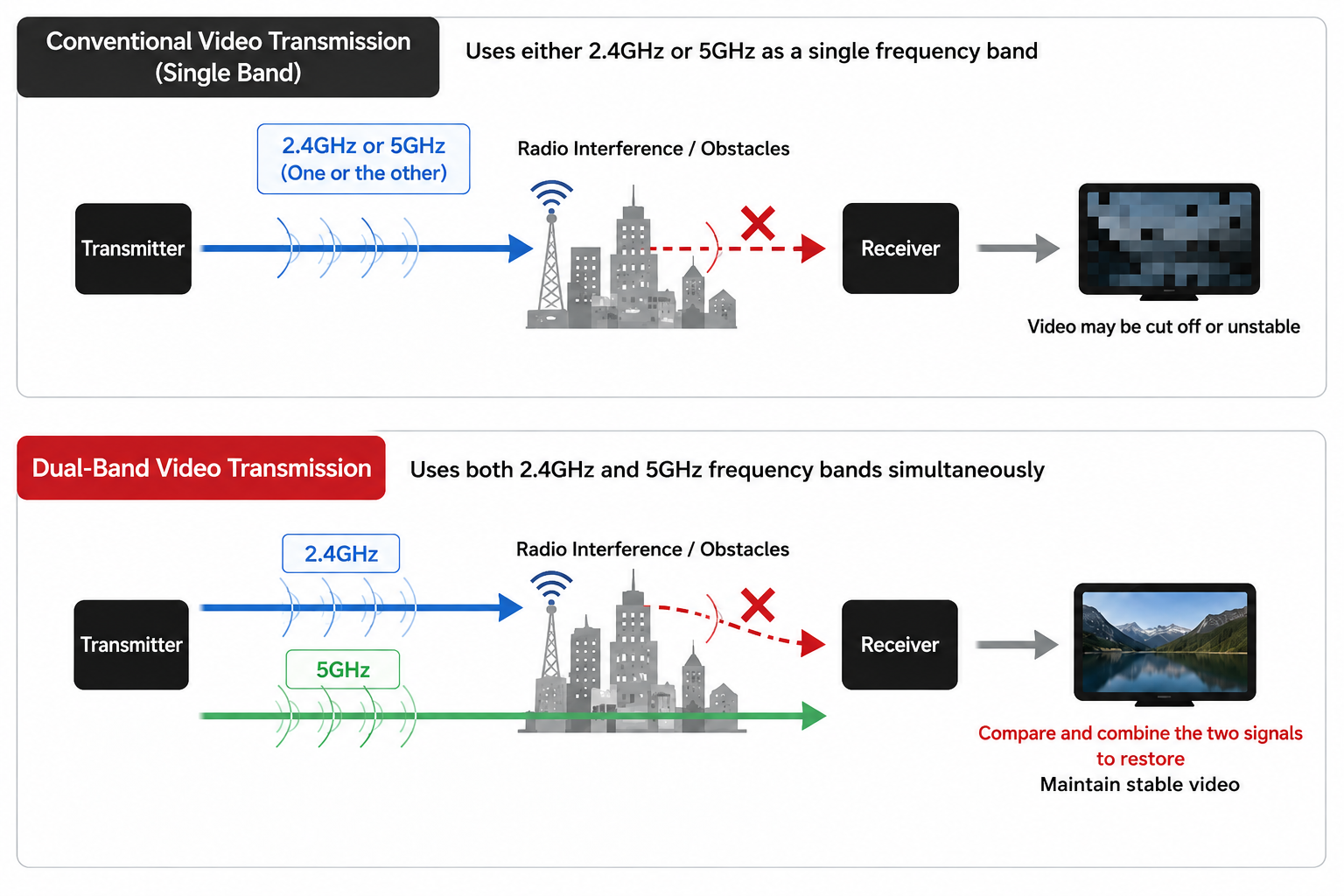
By transmitting and receiving two frequency bands, they complement each other like pieces of a puzzle to produce a single image.
Accsoon appears to have invested a great deal of time and money into this technology and has obtained a patent for it.
This system was first introduced in 2020 with the Accsoon Cine Eye Pro2 model and has been in use ever since.
Now, let't take some actual measurements!
Now, as we did last time, we’ll conduct hands-on testing with the Accssoon CineView SE.
The conditions remained the same, and we tested it in three scenarios.
◉Areas with fewer crowds
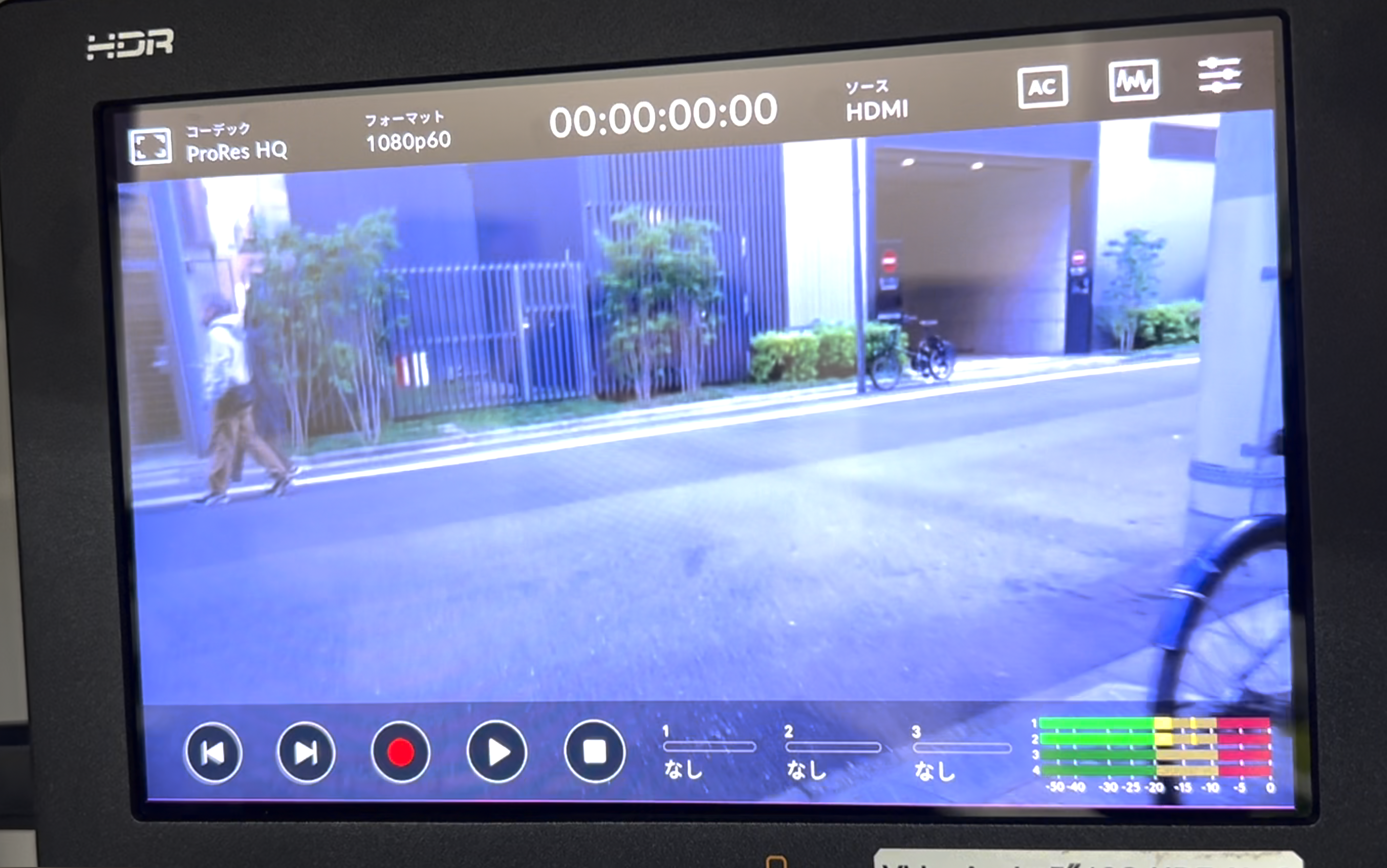
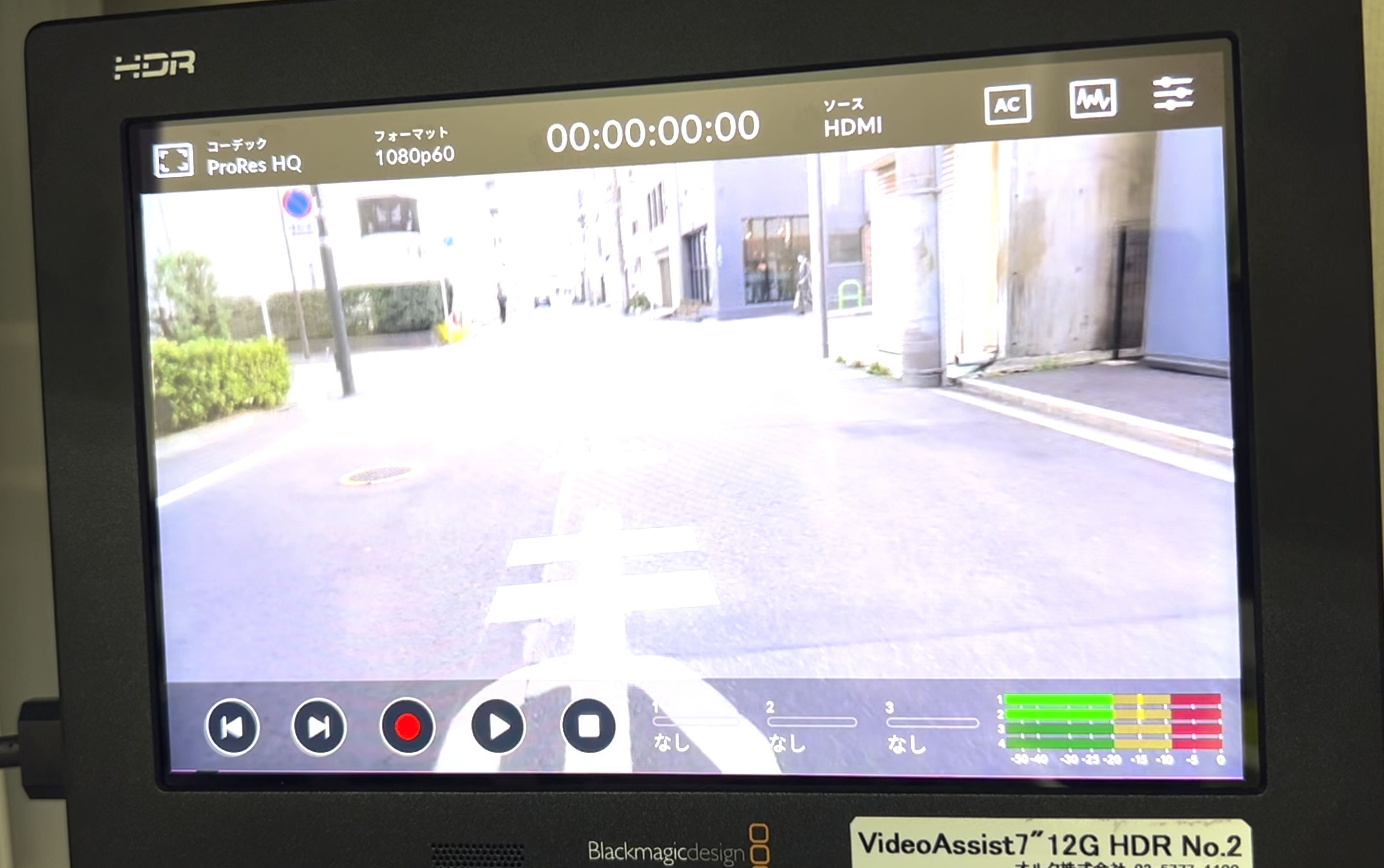
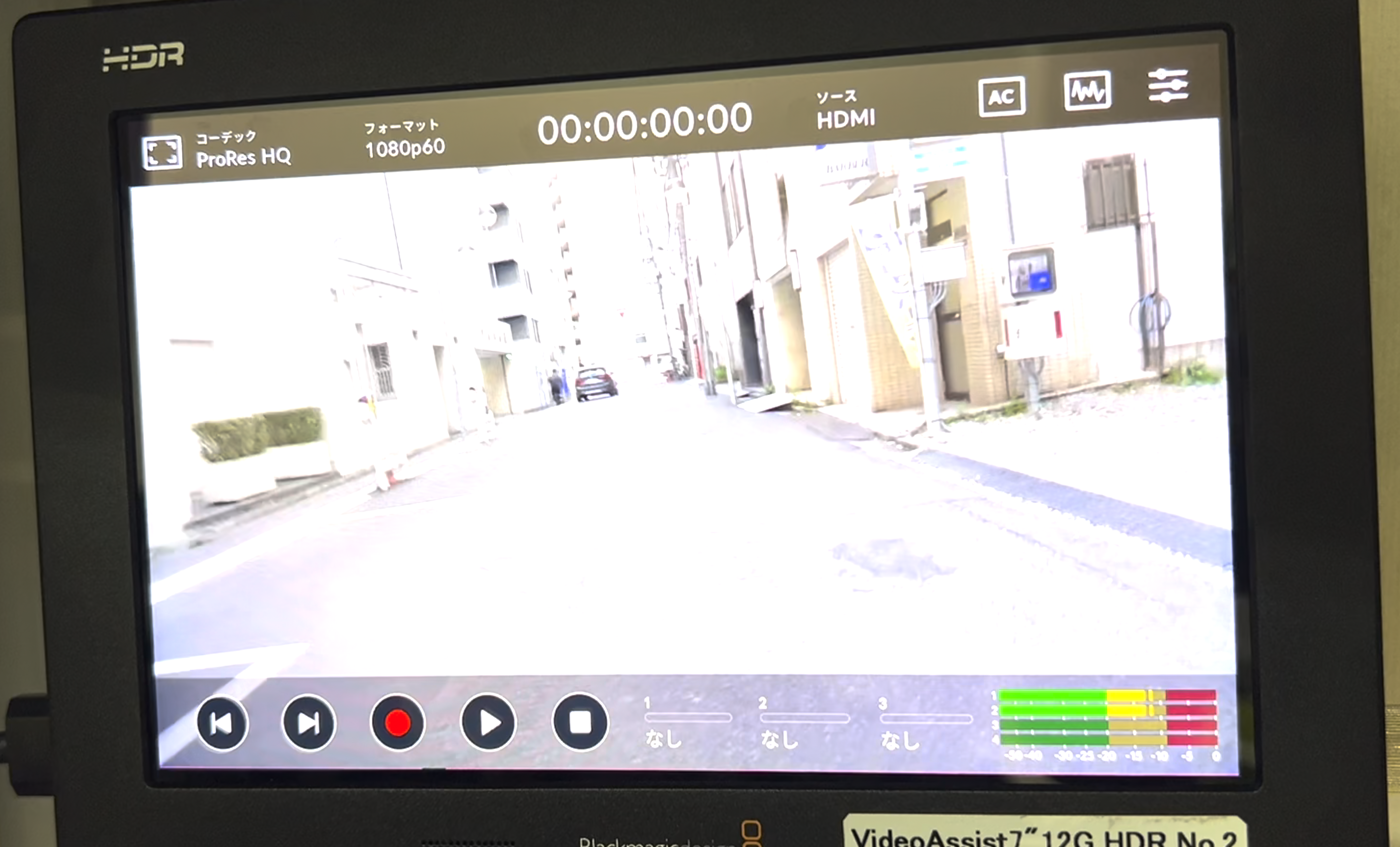
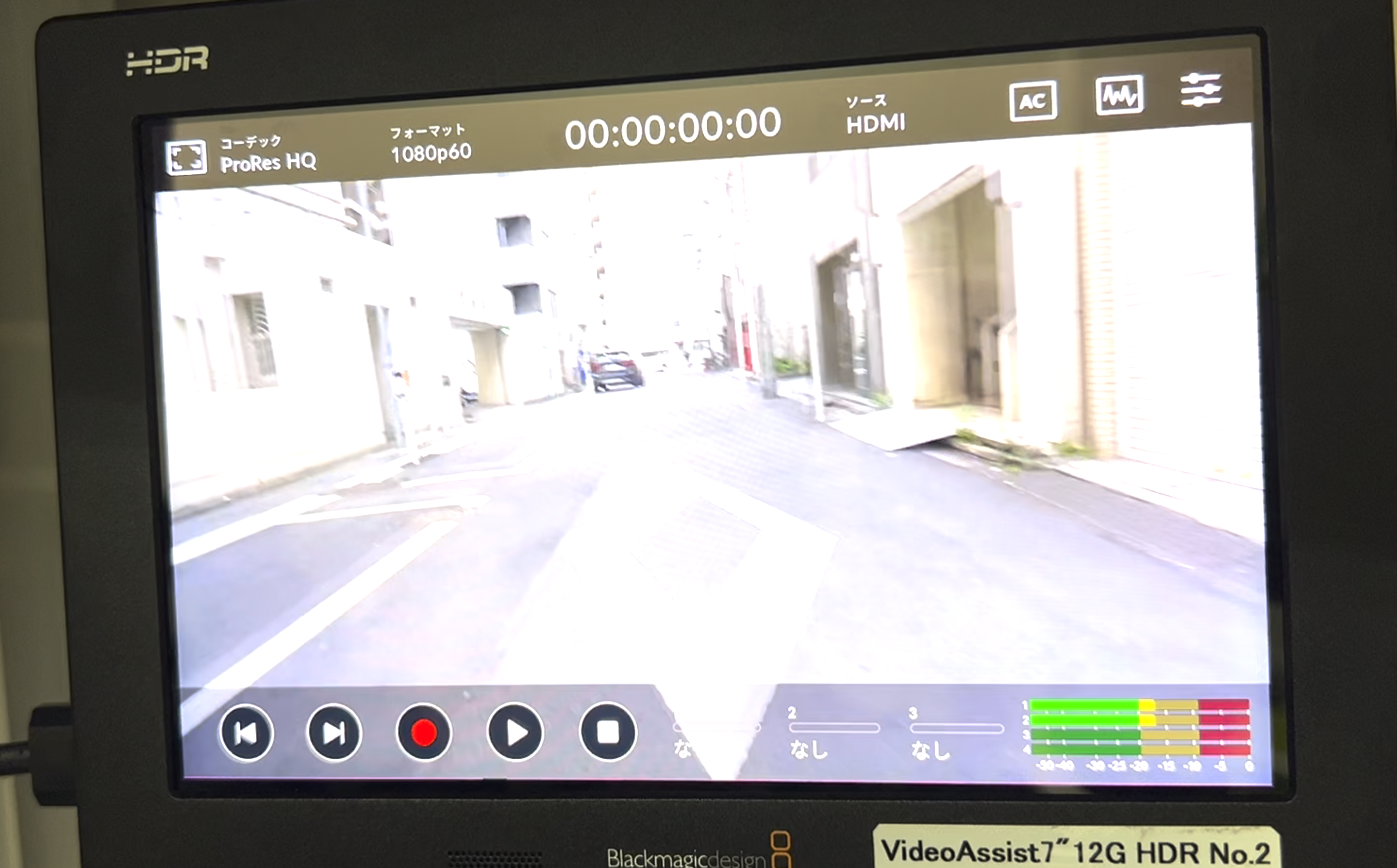
The Accsoon CineView SE continued to transmit the signal up to 100 meters without any loss in image quality.
With DJI SDR Transmission, starting at around 90 meters, we reduced the image quality to conserve energy for transmission and were able to transmit the signal up to approximately 130 meters.
These were truly fascinating results that offered a glimpse into the true power of dual-band technology and its limitations in real-world conditions, allowing us to clearly experience the differences in their respective characteristics.
◉Areas with large crowds
When you exit the JR North Exit ticket gates at Shimbashi Station, you’ll find exits leading to the Hibiya Exit (on the SL Square side) and the Ginza side, forming a tunnel-like passage.
Since there are a lot of people coming and going in that area, I’ll take a walk along a straight path that’s about 100 meters long.
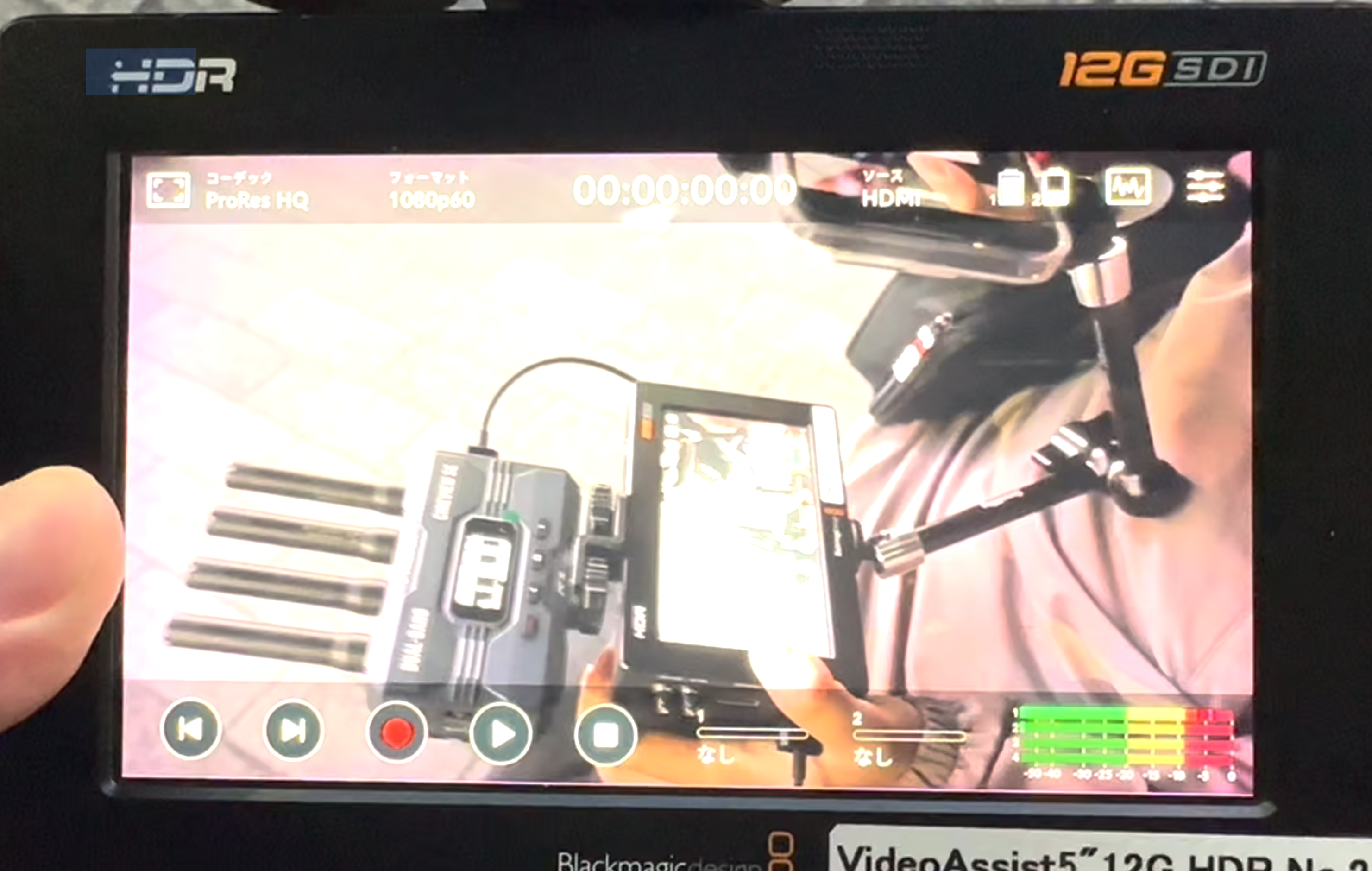
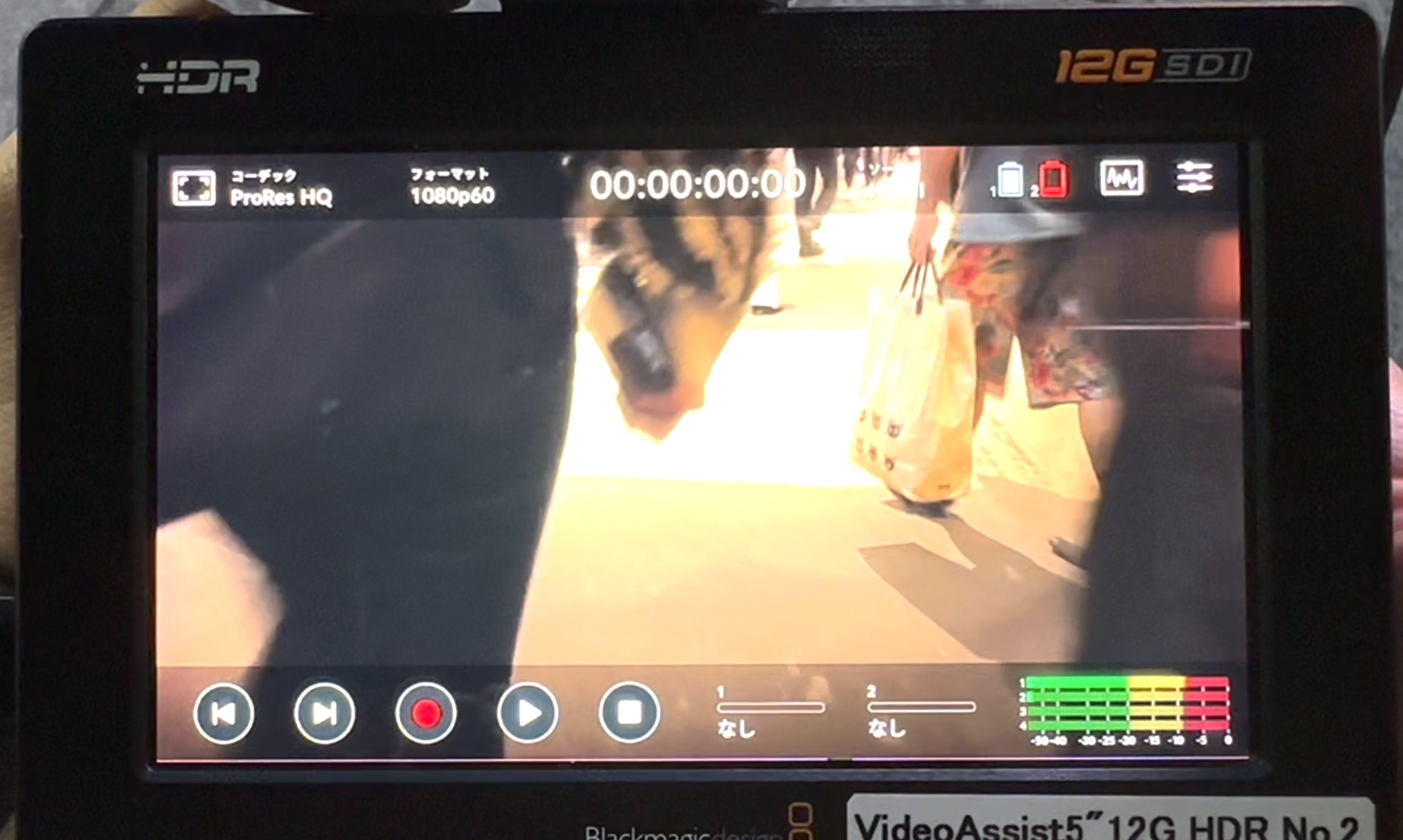
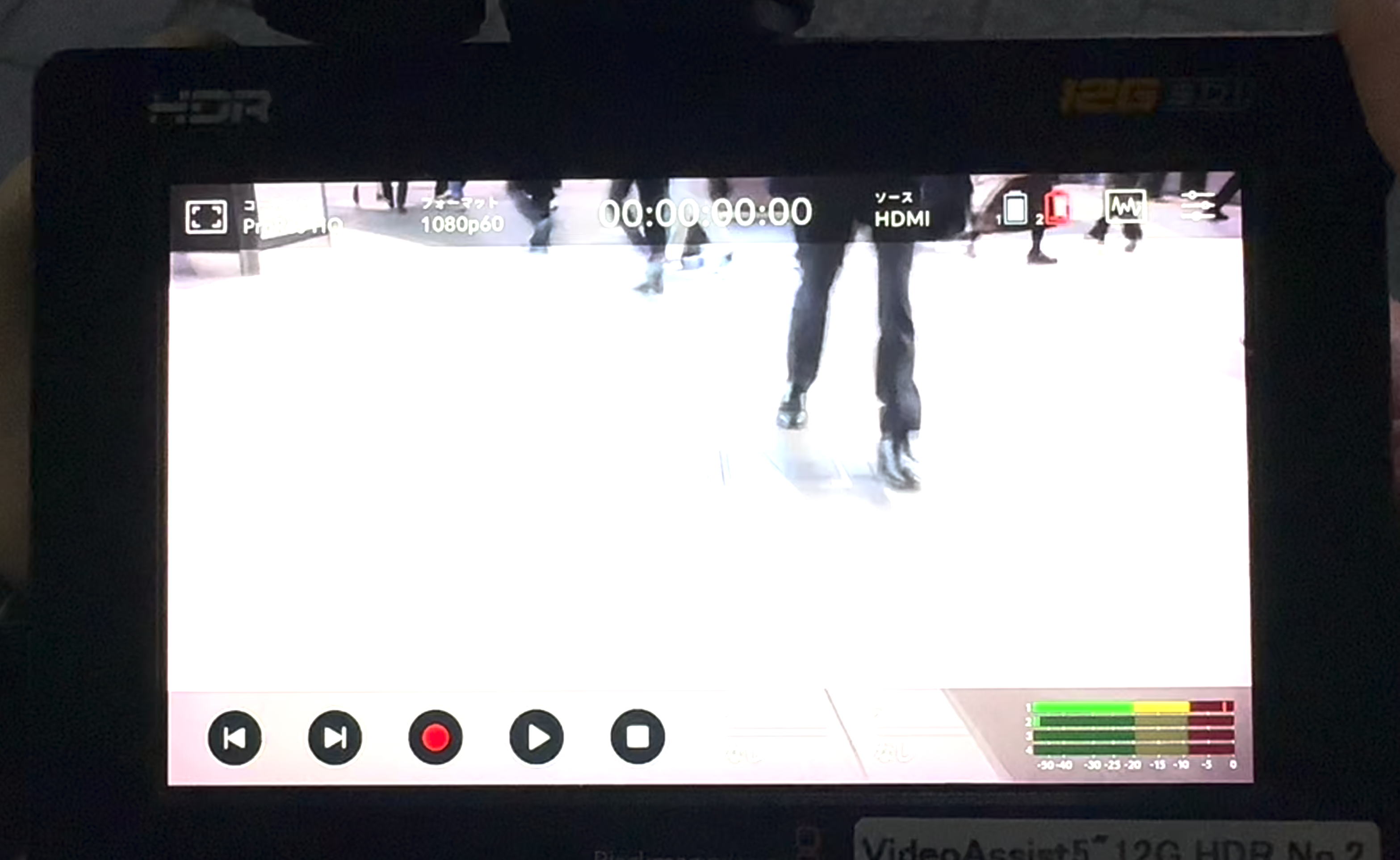
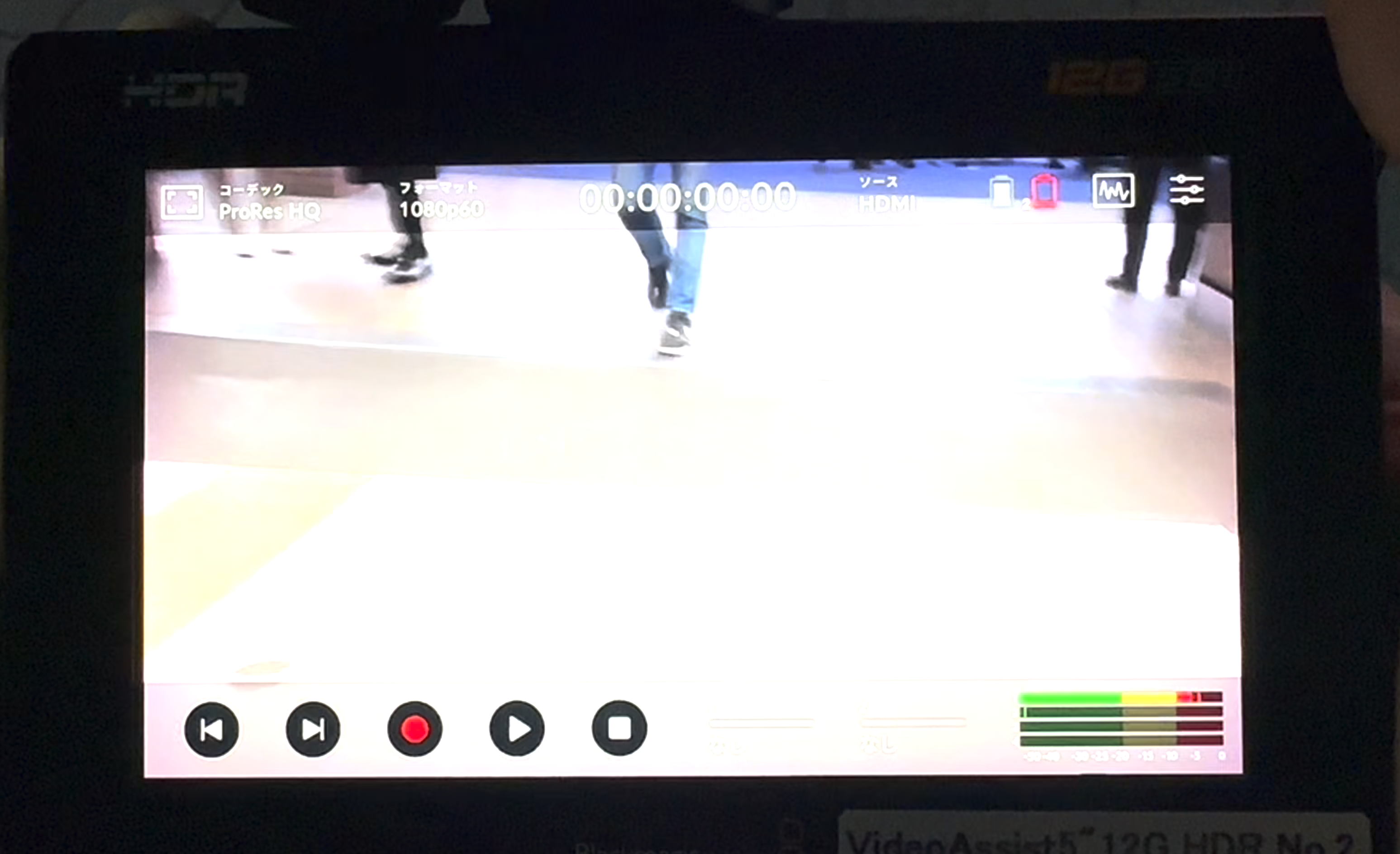
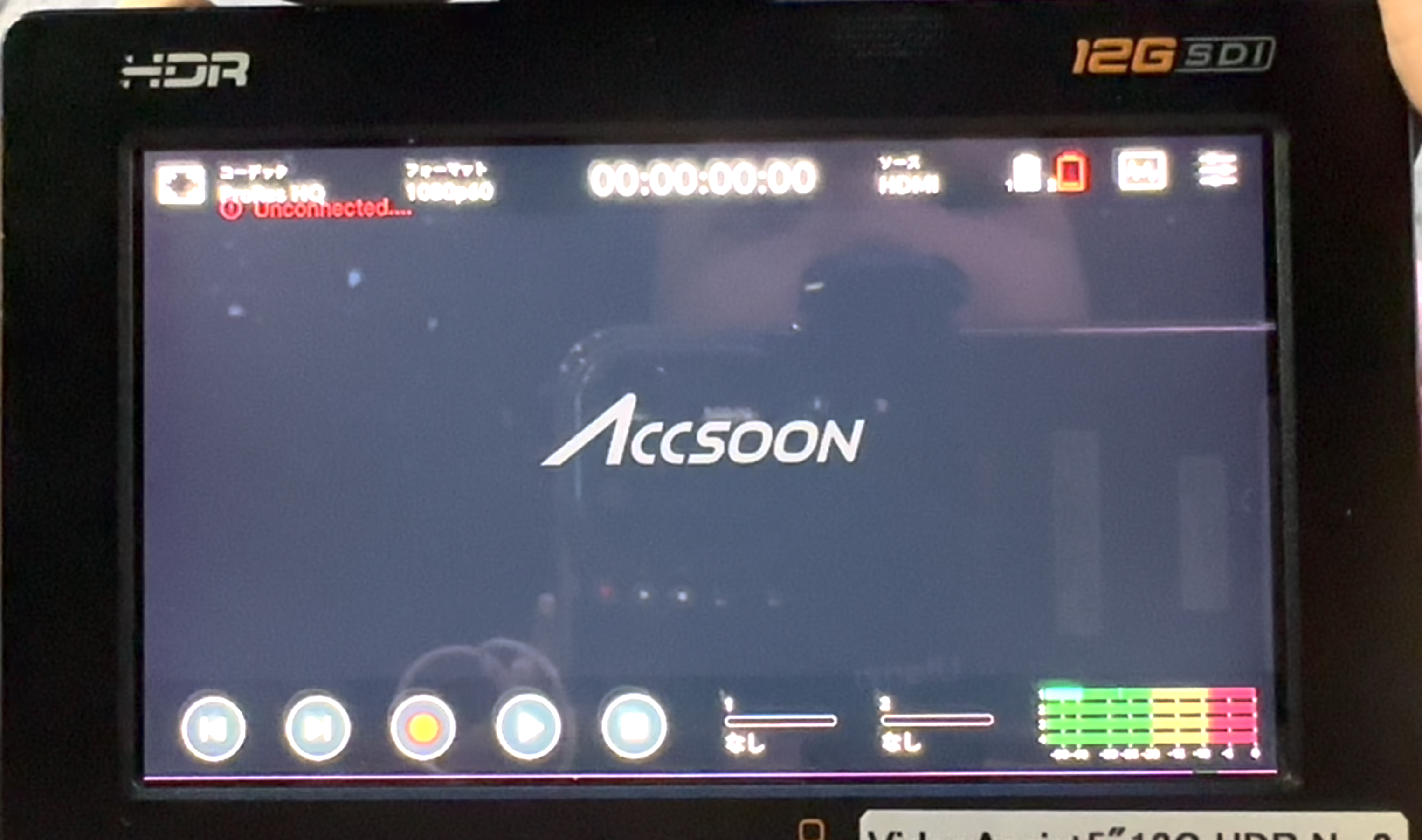
In areas with large crowds, the results were not much different from those of the previous DJI SDR Transmission Combo.
However,
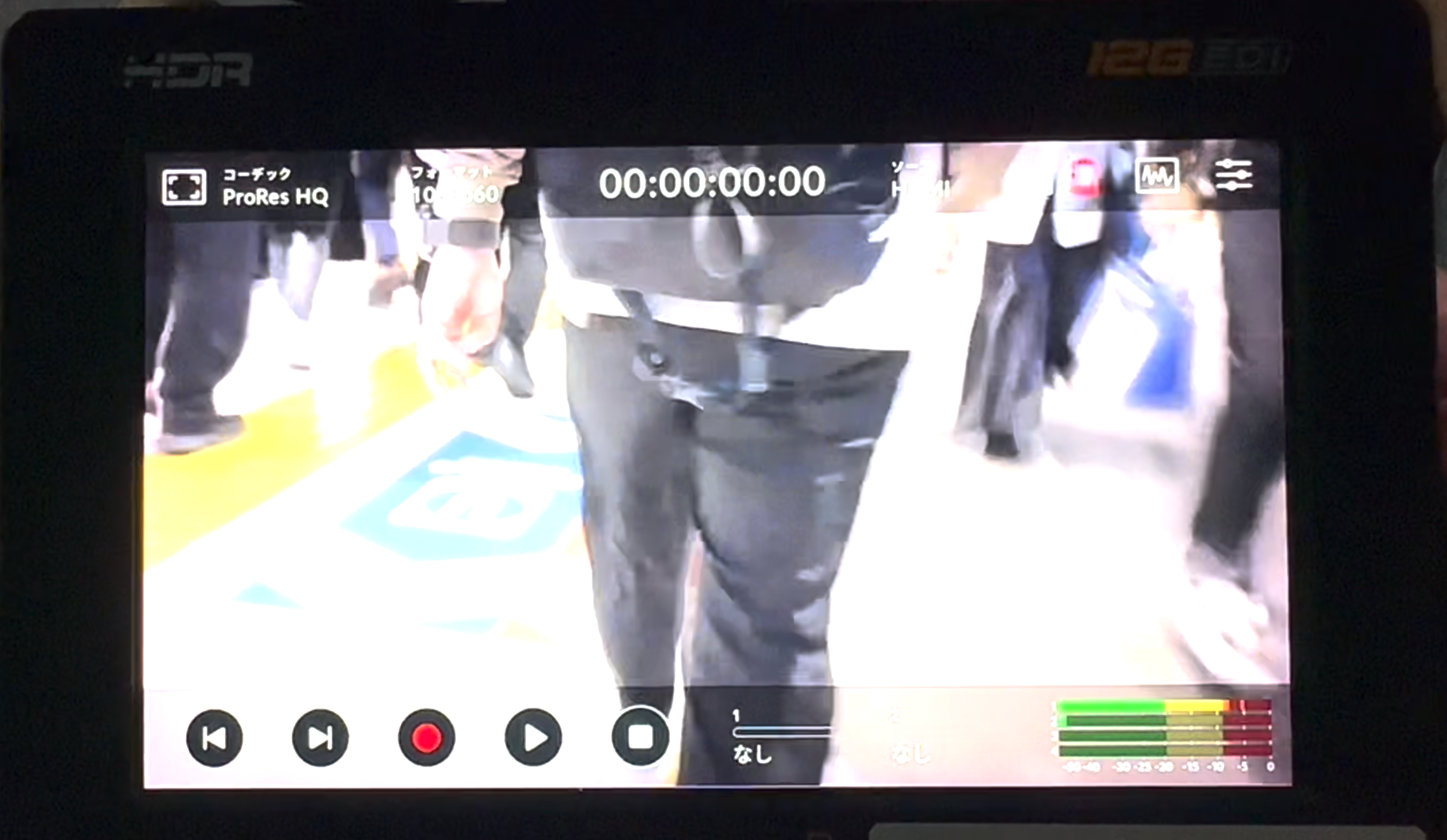
The recovery was faster than I expected.
With the previous DJI SDR Transmission Combo, the video feed gradually came back starting from about 20 meters away, but the Accsoon CineView SE restored the video feed from more than half that distance.
This really shows what dual-band is all about. It’s impressive.
Patented technology Unique to Accsoon
It seems that wireless video transmission systems touting “dual-band” capabilities are being showcased, but it is said that while such products do indeed have the ability to automatically switch between two frequencies, they lack the capability to transmit and receive on both frequencies simultaneously and recombine the signals.
In light of these developments, Accsoon has issued the following statement:
In recent years, there has been some confusion regarding how the term “dual-band” applies to wireless video systems.
In some cases, substandard systems that lack the ability to receive and recombine both frequencies simultaneously (as the Accsoon system does) are referred to as “dual-band” systems.
If the transmitter and receiver are not equipped with the four antennas required by the Accsoon system, the difference becomes apparent. These four antennas form the foundation of a dual-band Wi-Fi wireless video solution that offers superior stability and interference resistance.
Accsoon is confident that its WiFi-based dual-band solution is the most versatile solution for achieving superior wireless surveillance. To reiterate, Accsoon’s patented dual-band technology has not been licensed to any competitor.
__________________________________________________
What did you think?
When we tested it in real-world conditions, we were able to get a better sense of how the features actually performed in a real-world environment.
Offices (walls), crowded areas (network connections), and distance. Each of these unavoidable challenges in video transmission was analyzed, and the philosophies and proven technologies of various companies were condensed into a single compact device.
This is just my personal opinion, but I think this approach allows you to make the most of the capabilities available based on the scale of use.
I think it’s best to understand the strengths and weaknesses of each and use them appropriately.
Thank you for reading this far.
We look forward to seeing you again next time!
Source/Reference: Accsoon Official Website
Olq Inc. primarily stocks and rents out video, audio, and other equipment! If you are considering using our services for the first time, please register as a member on our e-commerce site and fill out the required fields.
Feel free to contact us, even if you just want to discuss equipment rental!

〒105-0004
Second Shinyo Building 1F, 6-10-Shimbashi, Minato, Tokyo, Japan 105-0004
TEL: 03-5777-1100
FAX: 03-5777-1101